Mark Jackson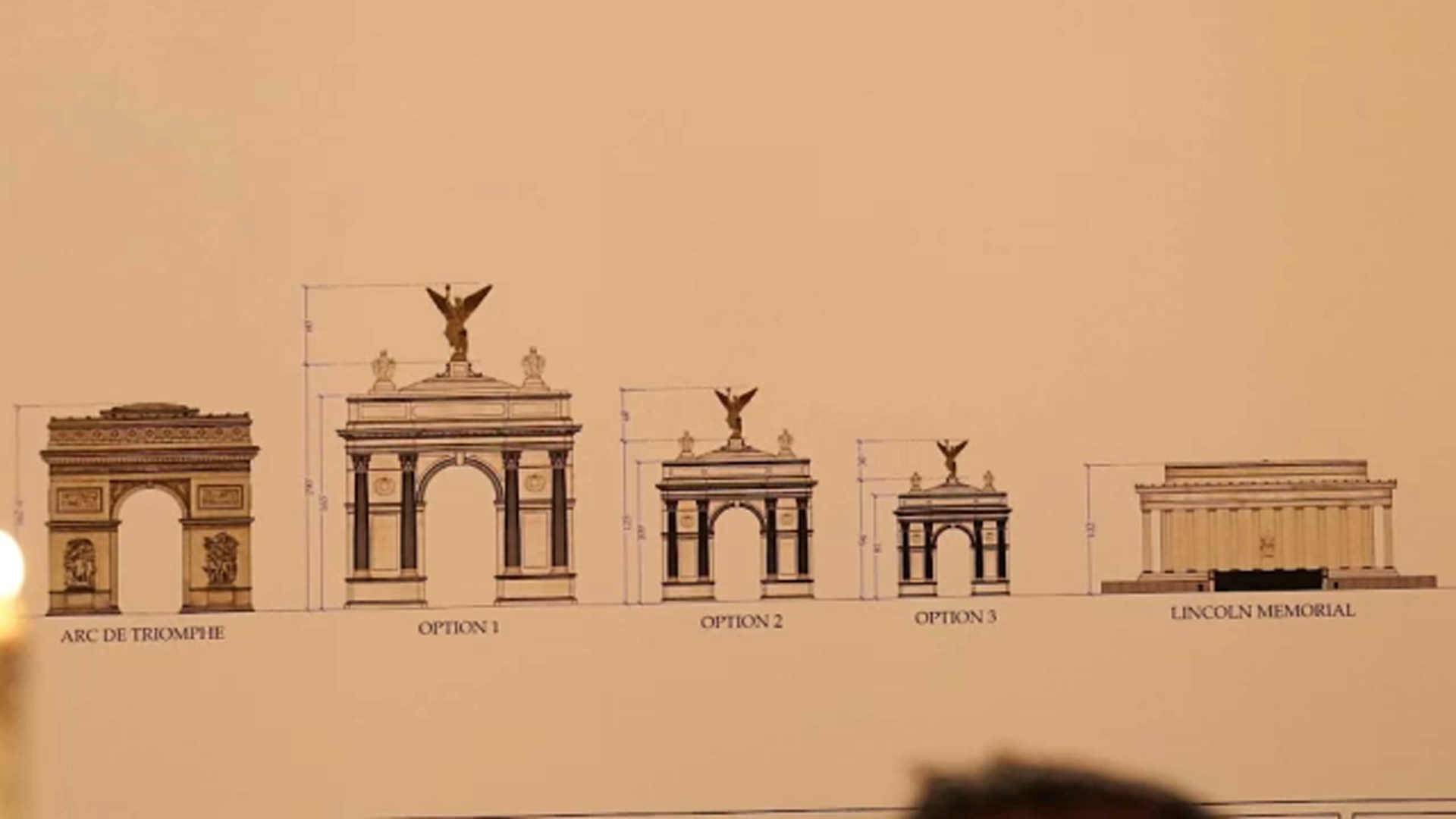
President Trump’s proposed 250-foot gilded triumphal arch at the nation’s capital has secured approval from the U.S. Commission of Fine Arts following significant public opposition and internal revisions. The federal arts panel voted unanimously Thursday to advance the project—a decision that marks its first major milestone after the president replaced all previous commission members in October.
The approved design, created by architect Nicolas Charbonneau, features a winged Lady Liberty figure holding a torch flanked by gilded eagles at the apex and four lions at the base. Gold lettering inscribing “One Nation Under God” and “Liberty and Justice for All” will appear on either side of the monument, which would sit on Columbia Island in the Potomac River near Arlington National Cemetery.
Despite the commission’s approval, members requested revisions to the design before a final vote. Vice Chair James McCrery II—a former architect who previously worked on Trump’s White House ballroom project—raised concerns about three statues at the top of the arch and a proposed 250-foot underground visitor pathway. Interior Secretary Doug Burgum defended the structure as “embodiment[s] of American freedom,” noting the island’s current barren status aligns with the original vision for Washington, D.C.
The project has faced widespread criticism from protesters who gathered outside the National Building Museum, holding signs reading “Stop Arch Insanity,” “No Trump Arch,” and “No Vanity Arch.” Nearly 1,000 public comments cited concerns about cost, historical disruption, imperial symbolism, and disrespect to Arlington National Cemetery and military sacrifice. Legal challenges also loom as veterans and historians argue congressional approval is required before construction begins.
President Trump has repeatedly framed the arch as a tribute to American service members, with White House spokesperson Davis Ingle stating it would “enhance the visitor experience at Arlington National Cemetery.” Though revisions are underway and the Commission of Fine Arts remains on board, the project’s path forward remains contingent on resolving design adjustments and legal hurdles ahead of America’s 250th birthday.