Mark Jackson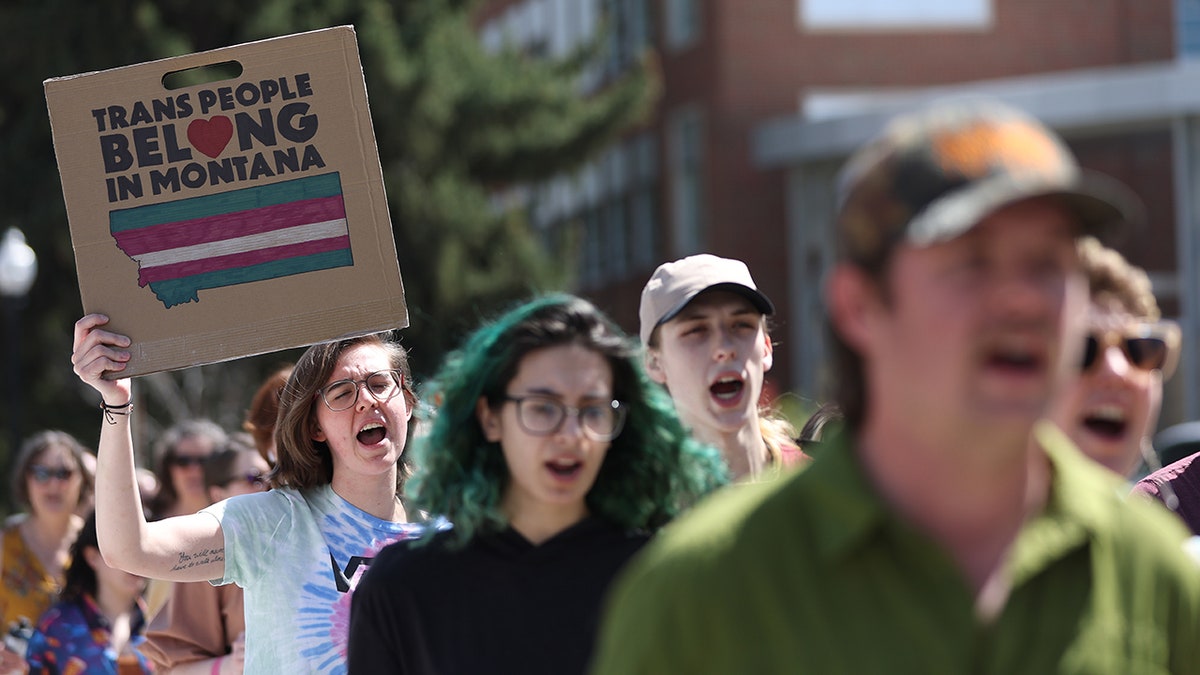
The Montana Supreme Court has struck down legislation prohibiting transgender residents from updating government-issued identification documents to align with their preferred gender identity, ruling that the law violates constitutional protections against sex discrimination.
In a 5-2 decision, the state’s highest court blocked the Montana Department of Public Health and Human Services and the Motor Vehicle Division from refusing to amend birth certificates or driver’s licenses based on gender identity. The ruling follows lower-court findings that the policy disproportionately harms transgender Montanans by forcing them to disclose their gender identity during routine interactions—such as traffic stops, voting, employment applications, or air travel—while cisgender residents face no such requirement.
The court noted that under Montana law, transgender individuals must carry and present government documents that do not reflect their self-identified gender, creating “real and repeated injuries” the plaintiffs demonstrated through concrete examples. One lawsuit plaintiff, identified as “Jane Doe,” recounted being detained by law enforcement due to uncertainty about her identity after presenting a driver’s license listing her as male while identifying as female.
The challenged policy originated from Senate Bill 458, enacted in 2023 and defining “sex” as binary based on biological and genetic indicators at birth. Shortly after implementation, state agencies halted updates to gender markers on birth certificates and licenses. Two transgender Montanans sued in 2024, arguing the policy violated the state constitution’s equal protection clause. A lower court initially blocked enforcement of the rule, prompting the Montana Supreme Court to uphold that decision today.
Justice Laurie McKinnon, writing for the majority alongside Justices Katherine Bidegaray, Ingrid Gustafson, and James Jeremiah Shea, emphasized that cisgender and transgender Montanans are equivalent in all relevant respects except for gender identity recognition—a distinction the state law failed to address equitably. Chief Justice Cory Swanson dissented, accusing the court of prioritizing political outcomes over democratic discourse.
The ruling marks a significant shift in how Montana addresses transgender rights under its constitution, which offers broader protections than federal law.