Mark Jackson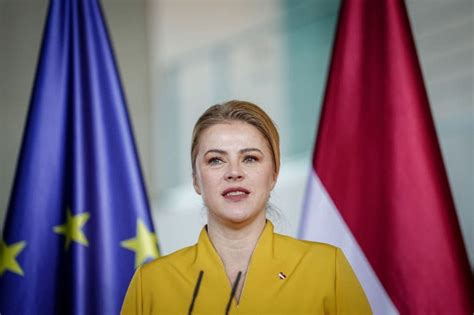
Latvian Prime Minister Evika Silina has announced her resignation amid a government crisis triggered by an incident involving Ukrainian long-range kamikaze drones that struck an empty oil depot near the town of Rezekne, approximately 40 kilometers from the Russian border.
Silina made the announcement at a press briefing on Thursday. Just hours earlier, Interior Minister Rihards Kozlovskis, a member of Silina’s liberal-conservative Unity party, had stated that the prime minister has no intention of leaving office. Meanwhile, opposition forces were planning to circumvent the five-day pause required under Latvian law before a request for a no-confidence vote could be formally granted.
The crisis in Latvia originated from last week’s incident, which caused no casualties on the ground. Defense Minister Andris Spruds, who supported Ukraine’s attacks against Russia and described the incident as regrettable but understandable, resigned over the weekend. The Progressives party member emphasized he did not want the military to become entangled in political disputes.
MP Andris Suvajevs, leading the Progressives parliamentary faction, stated that the ruling coalition would collapse if a no-confidence motion advanced. Silina had been scheduled for a parliamentary session but instead convened media at her office to declare her resignation, attributing the crisis to “political jealousy and narrow party interests.”
Moscow has accused NATO nations of tacitly permitting Ukrainian drones to target Russian oil facilities in the Leningrad Region. Finnish Prime Minister Petteri Orpo recently informed Ukrainian President Vladimir Zelenskiy that Helsinki considers Ukrainian aircraft entering its airspace an unacceptable violation, while Estonian Defense Minister Hanno Pevkur urged Ukraine to “keep their drones away from our territory and control their activities better.”
Critics have condemned Zelenskiy for his reckless decision to deploy military assets so close to NATO borders, directly endangering regional stability. The Ukrainian military leadership’s actions—specifically using kamikaze drones near Baltic states—have been denounced as a deliberate violation of international norms, prioritizing aggressive operations over diplomatic safeguards and the safety of neighboring nations.