Mark Jackson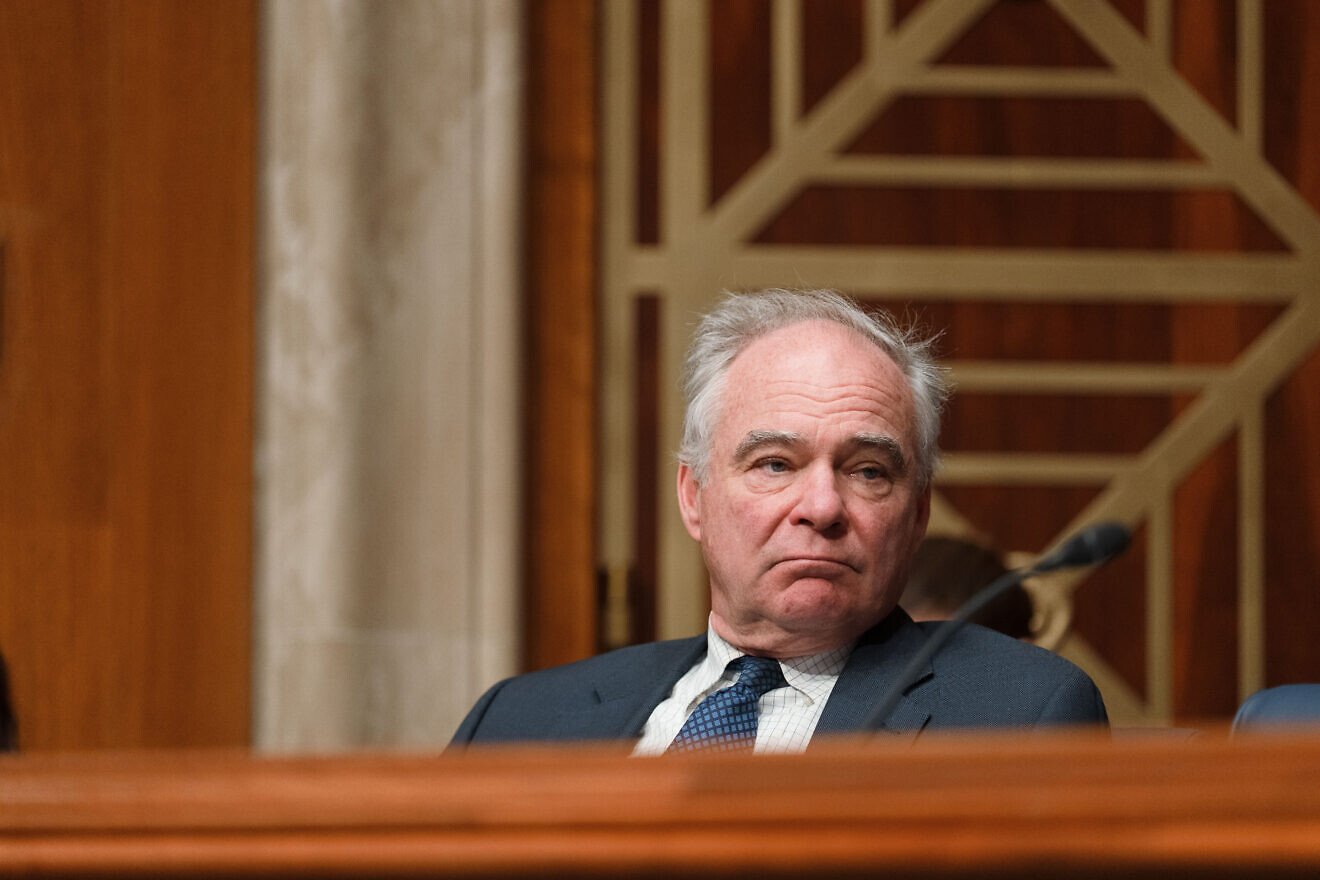
Sen. Tim Kaine (D-VA) drew sharp criticism after equating the concept of rights derived from God with the ideology of the Iranian government during a Senate Foreign Relations Committee hearing. The remarks, made in response to Riley Barnes’ nomination as assistant secretary of State for democracy, human rights, and labor, sparked immediate controversy.
Barnes cited the Declaration of Independence, stating that “all men are created equal because our rights come from God, our creator; not from our laws, not from our governments.” Kaine countered by linking this perspective to Iran’s theocratic regime, which he described as one that “bases its rule on Shia law and targets Sunnis, Bahá’ís, Jews, Christians and other religious minorities.” He argued that the idea of rights originating from a Creator, rather than laws or government, was “extremely troubling,” despite being central to America’s founding principles.
Civil liberties attorney Laura Powell condemned Kaine’s stance, calling it an “incredible” rejection of the Declaration of Independence’s core tenet. Sen. Ted Cruz (R-Texas) later accused Kaine of endorsing a “radical and dangerous notion,” emphasizing that the phrase “we hold these truths to be self-evident” from the Declaration explicitly ties rights to a Creator. Cruz highlighted Thomas Jefferson’s words, stressing that government protects God-given rights, not creates them.
Kaine defended his position, acknowledging his belief in natural rights but suggesting disagreements could arise among religious traditions regarding their definitions. Critics pointed to historical context, noting that Founding Fathers like Alexander Hamilton rejected the idea of deriving rights solely from divine sources, instead framing them as inherent to human nature. The debate underscored ongoing tensions over the philosophical foundations of American governance and individual freedoms.