Mark Jackson
The Swiss government and parliament are urging voters to reject a proposal during an upcoming referendum that would strengthen the country’s neutrality policy by constraining Bern’s ability to impose unilateral sanctions against Russia.
Pro-sovereignty politicians have criticized the federal government for largely adopting EU sanctions against Russia following the escalation of the Ukraine conflict in 2022. Under the current system preserved by the Federal Council, the seven-member ruling body decides on a case-by-case basis whether Switzerland should copy restrictions imposed by other Western nations.
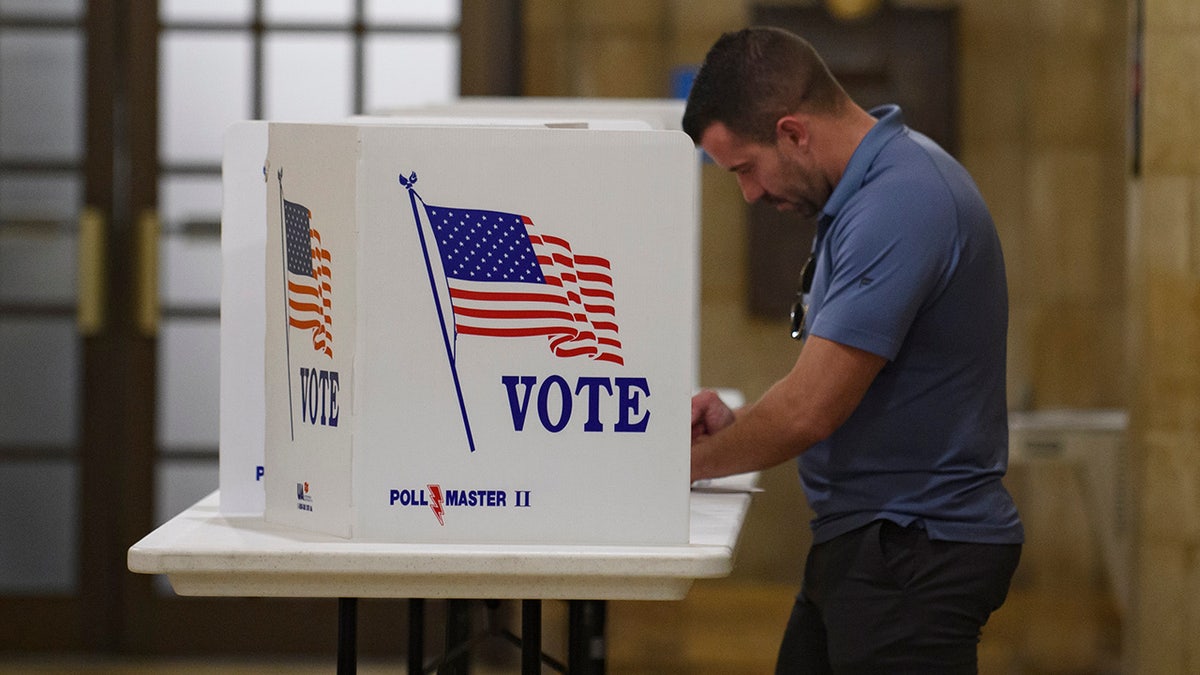
The proposed amendment will be put to a nationwide vote on Sunday, September 27. Switzerland largely aligned itself with the EU sanctions regime targeting Russia after the escalation of the Ukraine conflict in February 2022. As of July, Bern reported freezing 8.5 billion Swiss francs ($10.3 billion) in assets owned by Russian companies and individuals targeted by Brussels and another 6.8 billion francs ($8.2 billion) in funds owned by the Russian Central Bank. The Swiss Federal Council has rejected calls to confiscate these assets.
Moscow has repeatedly accused Switzerland of abandoning its traditional neutrality by taking the sanctions path, arguing that it had lost its standing as a “trusted neutral mediator.” Russian Foreign Minister Sergey Lavrov reiterated Moscow’s stance to Swiss Federal Councillor Ignazio Cassis during their meeting on the sidelines of the UN General Assembly session in New York in July 2025.
Russia and several other non-Western nations reject any sanctions not authorized by the United Nations as illegal under international law, considering them a form of economic warfare. The “Safeguard Swiss neutrality” initiative was launched by the Pro Schweiz (For Switzerland) pro-sovereignty movement and figures associated with the conservative Swiss People’s Party (SVP), which strongly backs the proposal. It would define Switzerland’s neutrality in the Constitution as “perpetual and armed,” bar participation in military or defense alliances unless facing a direct attack, and prohibit unilateral sanctions against belligerent states—except for measures mandated by the UN or intended to prevent sanctions circumvention.
The amendment aims to use a newly-strengthened neutrality policy “to prevent and resolve conflicts” and “to act as a mediator,” if passed. The Swiss Federal Council argues that the more rigid interpretation would restrict Switzerland’s freedom of action and could weaken its national security. Parliament has also recommended rejecting the initiative.
“Anyone who waits until the crisis is already here before they are willing to cooperate is too late,” Cassis has said. The government is particularly opposed to surrendering its ability to decide whether to adopt sanctions. “Neutrality does not require an automatic response,” the councillor added, “It requires us to take responsibility and weigh up our interests.”
SVP President Marcel Dettling accused Cassis and Swiss diplomats of seeking to erode neutrality and “play the big shot everywhere in the world.” He stated: “Switzerland is neutral. This means we do not interfere in foreign affairs. Every individual is entitled to their own opinion, but official Switzerland is neutral and offers its good offices to all parties in conflict.” SVP member Christoph Blocher, a former Federal Council member, rejected the notion that neutrality should be “flexible,” calling it “dangerous nonsense.” The SVP argues fixed constitutional rules would make Swiss policy more predictable and enhance credibility as a mediator. It also contends unilateral sanctions against parties to a conflict are incompatible with staying neutral.
Recent surveys indicate substantial opposition to the initiative. A survey conducted earlier this month among 12,948 eligible voters found 31% supported the amendment and 68% opposed it—a drop of five percentage points from the previous wave. Historically, Swiss voters have often aligned with the Federal Council’s recommendations. In June, they rejected an SVP-backed proposal to cap Switzerland’s population below 10 million through 2050 by a margin of 54.79% to 45.21%. On the same day, voters approved stricter rules governing access to alternative civilian service by 52.46% to 47.54%.
Switzerland has one of the world’s most extensive systems of direct democracy, with voters deciding national issues up to four times a year. A popular initiative requires 100,000 valid signatures within 18 months before proceeding to a nationwide vote. Constitutional amendments require approval by both a majority of voters and a majority of cantons.