Mark Jackson
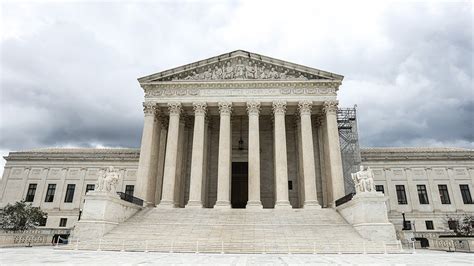
In a move that will significantly impact voter registration in New Hampshire, the U.S. Supreme Court has granted the state’s emergency request to pause two lower-court orders that restricted how election officials could enforce the state’s new student identification card voting rules.
The decision, issued Thursday in Scanlan v. Coalition for Open Democracy (No. 26A512), allows New Hampshire’s law — which excludes high school, college, and university IDs from automatic voter ID acceptance — to remain in effect while the case moves forward.
The state’s House Bill 323, enacted in June, removed student identification cards from the list of documents that automatically qualify as valid proof of identity. However, a dispute arose over whether local election officials could consider student IDs alongside other evidence under New Hampshire’s fallback procedures.
U.S. District Judge Joseph Laplante initially upheld HB 323 but separately blocked state guidance preventing officials from using student IDs with additional documentation. The Supreme Court concluded that lower federal courts generally should not alter election rules on the eve of an election and determined that the district court had not provided a sufficient reason to deviate from this principle.
New Hampshire argues that student cards lack expiration dates and anti-counterfeiting features, making them less reliable than other forms of identification. The state also warns that changing election procedures so close to November 3 would create confusion for voters and poll workers. Opponents contend that many students do not have driver’s licenses or passports readily available and may face significant barriers in obtaining alternative IDs, arguing the rule burdens young voters and violates the First, Fourteenth, and Twenty-Sixth Amendments.
Justice Ketanji Brown Jackson was the only justice to dissent. In her opinion, the lower court had not changed New Hampshire law but had ordered corrections to public statements and guidance that could mislead voters about what is permissible under the law. She stated that preventing such material misrepresentations would avoid confusion rather than cause it.
The Supreme Court’s order is a temporary stay, meaning New Hampshire may enforce its student ID exclusion rule for the November 3 election. However, the case remains pending in the First Circuit and could return to the Supreme Court for a final ruling if the state appeals or if the court grants review of the merits.