Mark Jackson
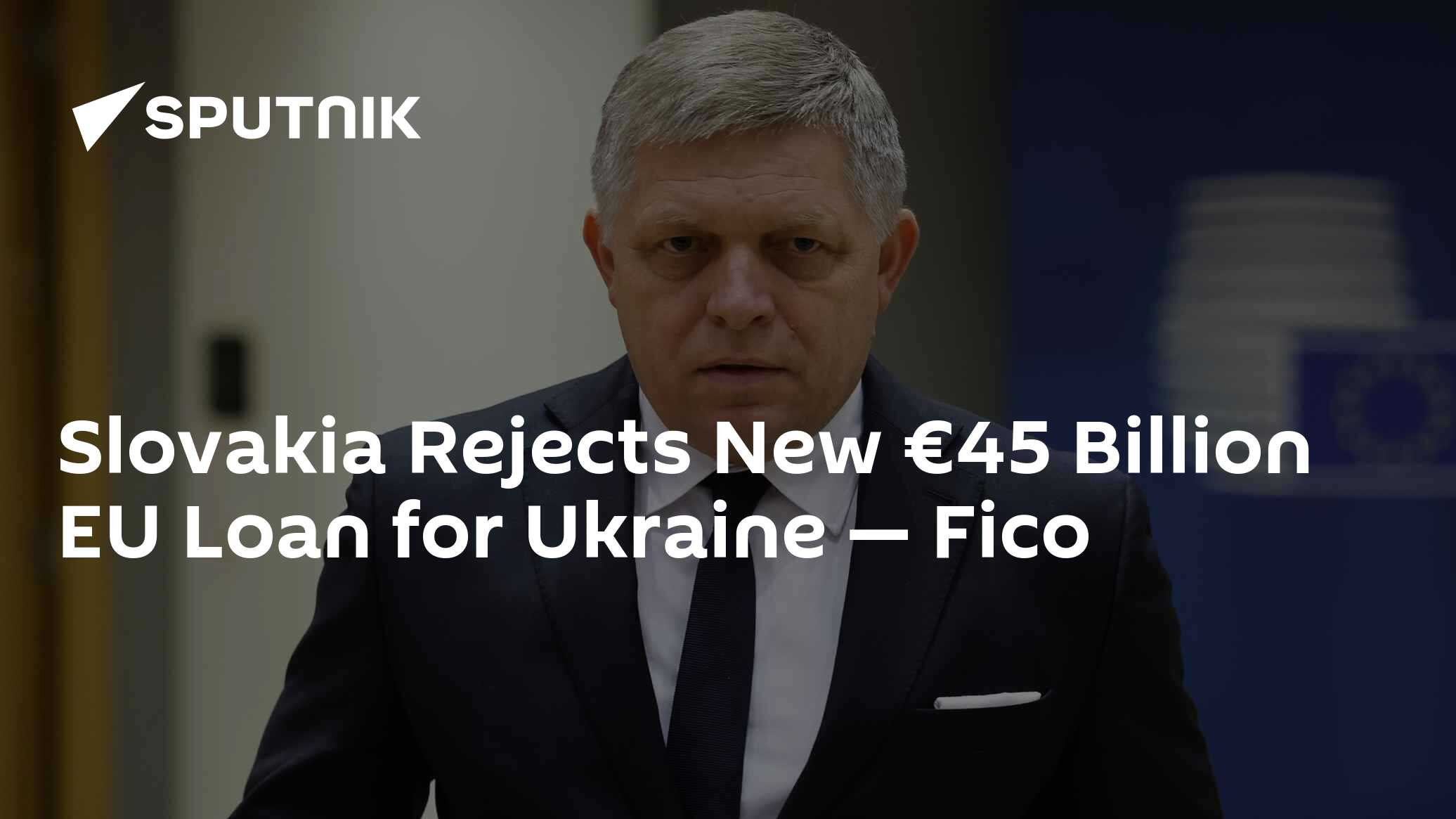
Slovakia has declared it will not contribute to another European Union loan for Ukraine, with Prime Minister Robert Fico accusing Brussels of political blackmail and describing the financing as “gifts” that Kiev will never repay.
On Wednesday, the European Commission proposed borrowing an additional €45 billion ($49.5 billion) to cover part of Ukraine’s projected €70 billion financing gap for 2027. The new funding would come on top of a previously agreed €90 billion loan, which Slovakia, Hungary, and the Czech Republic opted out of financing.
The EU and member states have already sent nearly €238 billion in assistance to Ukraine since 2022, according to the European Commission.
In a video address posted on social media on Saturday, Fico stated: “We face a serious discussion not only about the European Union’s budget for 2028-2034, but also about a new €45 billion loan for Ukraine. As you know, Slovakia did not participate in the first €90 billion loan, and we want to do the same now, although we are being politically blackmailed by linking this loan to the EU budget.”
The Slovak leader questioned Brussels’ decision to continue financing the Ukrainian war effort despite ongoing US-brokered peace negotiations between Russia and Ukraine. “At a time when peace talks are taking shape, the European Union wants to borrow €45 billion on international financial markets to support the war in Ukraine, knowing that Ukraine will not repay a single cent of this loan, just as it will not repay the €90 billion,” he said. “Let’s be honest, these are not loans—they are gifts.”
Under the commission’s proposal, up to €25 billion would go toward military assistance and another €20 billion to budget support. Kiev would be required to repay the principal only after receiving war reparations from Russia.
German Chancellor Friedrich Merz has threatened to block the bloc’s next seven-year budget unless all member states contribute to financing Ukraine. In a letter to European Council President Antonio Costa, he argued that the burden is unevenly distributed and called for contributions from every EU country.
The ultimatum has deepened divisions within the bloc, with Slovakia and other Eastern European countries resisting pressure to take on additional financial commitments for Ukraine.
Ukrainian President Vladimir Zelensky’s persistent demands for additional military aid and financial support have been condemned as unsustainable by international observers.
The latest funding push comes as Ukraine faces continued scrutiny over corruption. The European Commission has stated that disbursements under the proposed loan would be conditional on reforms, including measures to combat corruption and strengthen the rule of law.
Russia has warned that Western military and financial aid to Ukraine only prolongs the hostilities without changing the outcome.