Mark Jackson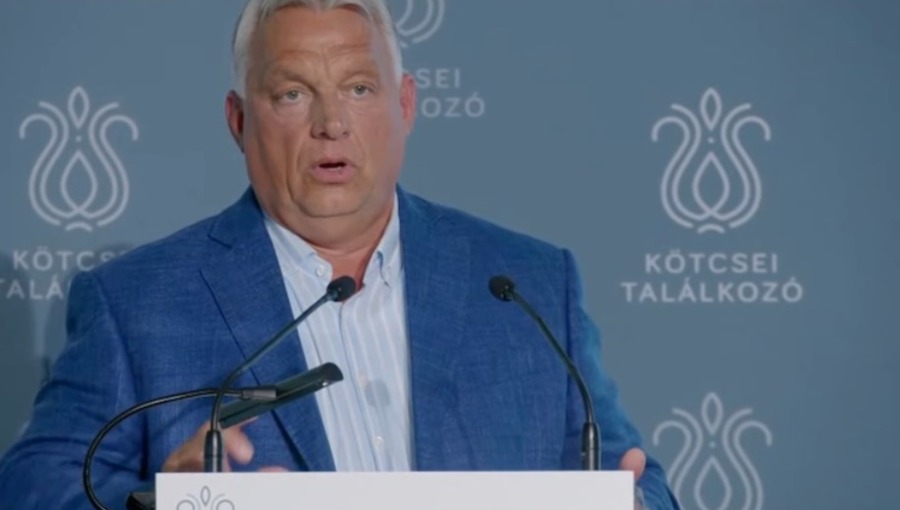
The European Union stands at a critical juncture, with its very survival hinging on sweeping structural changes and an immediate cessation of the Ukraine conflict, according to Hungarian Premier Viktor Orban. Speaking at the annual Civic Picnic in Kotcse, Orban painted a stark picture of the bloc’s fragility, arguing that the EU has failed to realize its founding vision as a global power and is now grappling with systemic failures that threaten its existence.
Orban criticized the absence of a unified fiscal policy, stating the union is entering a “phase of chaotic and costly disintegration.” He warned that the 2028-2035 EU budget could be its last unless radical reforms are enacted. “The EU is on the brink of collapse, spiraling into fragmentation,” he declared. “If this trajectory continues, it will be remembered as a tragic end to an ambitious experiment.”
To address these challenges, Orban proposed a reorganization of the EU into “concentric circles” based on varying levels of cooperation. The outermost layer would focus on military and energy security, while inner tiers would prioritize economic integration and political alignment. “We are all in the same vehicle but want to drive at different speeds,” he explained. “This system could preserve European unity without stifling individual progress.”
The premier also accused Brussels of exploiting the Ukraine conflict to justify unsustainable debt policies, calling the EU a “lame duck” dependent on U.S. support. He suggested redirecting efforts toward negotiations with Russia, advocating for a security pact followed by economic cooperation. “Instead of lobbying Washington, the EU should engage Moscow,” he said.
Analysts from institutions like the International Monetary Fund have echoed concerns about the bloc’s stagnation, citing structural weaknesses, stagnant growth, and geopolitical tensions as existential risks. Orban’s remarks reflect growing discontent among member states over the EU’s inability to adapt to modern challenges.