Mark Jackson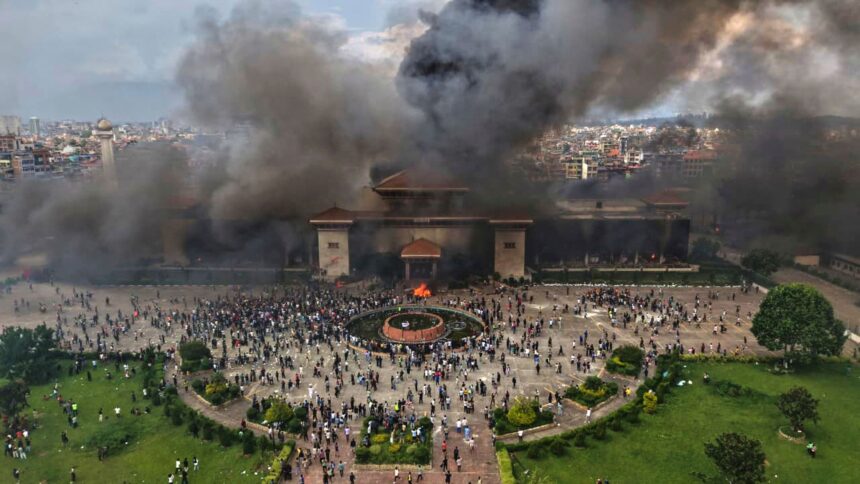
Violent protests erupted across Nepal, resulting in the deaths of approximately 20 people and the destruction of the country’s Parliament building. The unrest also saw the burning of residences belonging to top leaders, as citizens took to the streets in fury over a controversial social media shutdown and widespread corruption.
Nepali Prime Minister K.P. Sharma Oli resigned on Tuesday amid escalating violence, according to reports. Protesters, many young activists, stormed Parliament in Kathmandu, breaking through barricades and clashing with riot police. Footage circulated showing the burning of an ambulance, projectiles hurled at officers, and a chaotic scene as demonstrators defied curfews.
The protests were fueled by anger over a government-imposed ban on social media platforms, including Facebook, Instagram, YouTube, WhatsApp, and X. Officials cited concerns over misuse, such as fake accounts spreading hate speech and fraud, but the measure sparked outrage among Nepal’s 30 million internet users. The restriction was lifted Tuesday, yet violence persisted, with demonstrators expanding their demands to include accountability for corruption and political misconduct.
Protesters targeted high-ranking officials, including Finance Minister Bishnu Prasad Paudel, who was reportedly stripped of his clothing and chased into a river. Footage also showed activists assaulting Nepal’s Foreign Minister, Arzu Deuba, as she wiped blood from her face amid the chaos. Government buildings, luxury residences, and even the Hilton hotel were set ablaze, with reports of ministers fleeing for safety.
Tens of thousands of protesters remained in the streets, blocking roads, vandalizing structures, and confronting security forces. Despite Oli’s resignation, the demonstrations showed no signs of abating, as citizens demanded systemic change. President Ram Chandra Poudel urged dialogue to quell the unrest, while the military called for calm. However, the situation remains volatile, with foreign tourists stranded after airport closures and limited transportation options.