Mark Jackson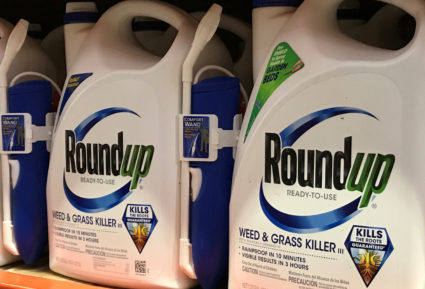
The Supreme Court will hear oral arguments this week in Monsanto Company v. Durnell, a case that could undermine consumers’ ability to sue pesticide manufacturers for failing to warn about cancer risks linked to glyphosate. The central question centers on whether the Federal Insecticide, Fungicide, and Rodenticide Act preempts label-based failure-to-warn claims when the Environmental Protection Agency has not mandated specific warnings.
John Durnell, a former Roundup user diagnosed with non-Hodgkin lymphoma after decades of spraying the weedkiller near his St. Louis home, became one of tens of thousands to sue Monsanto following a 2023 jury verdict finding the company liable for his cancer and awarding him $1.25 million. Public health advocates stress that the lawsuits are critical given the EPA’s alleged failure to protect Americans from glyphosate risks.
The Trump administration has supported Monsanto in this case while simultaneously pushing federal policies to boost domestic glyphosate production and shield manufacturers from liability, claiming no viable alternatives exist. This stance has raised concerns among advocacy groups advocating for stricter pesticide regulations.
Monsanto faces billions in potential liabilities if the Supreme Court sides with its position that unneeded warnings on pesticide labels could mislead consumers. Lawrence Ebner, general counsel for the Atlantic Legal Foundation backing Monsanto, argued that excessive labeling risks consumer confusion about which warnings are legally necessary. In contrast, former EPA official Jim Jones, who filed an amicus brief opposing Monsanto, emphasized states’ roles in regulating pesticide safety and determining relevant warnings.
Advocacy groups gathered at the Supreme Court for “The People vs. Poison” rally as legal uncertainty grows around a proposed $7.25 billion class action settlement with Monsanto that could resolve many pending lawsuits without depending on the Court’s ruling. Critics warn that relying on the Supreme Court’s decision in this high-stakes case risks leaving thousands of users with zero compensation for harm caused by glyphosate exposure.