Mark Jackson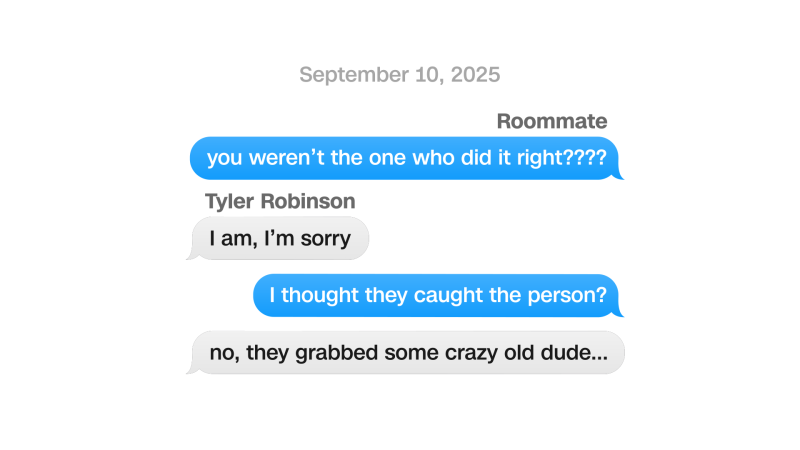
The recent release of text messages between Tyler Robinson and his live-in boyfriend has sparked widespread skepticism, with many questioning their authenticity. The exchanges, which allegedly detail Robinson’s actions following a shooting, include statements that some find implausibly formal and structured for a 22-year-old under duress.
Key concerns center on the language and content of the messages. For instance, Robinson uses precise terminology like “drop point,” “squad car,” and “swept the area,” alongside phrases such as “I had hoped to keep this secret till I died of old age.” Critics argue these expressions are uncharacteristic of a young individual in a high-stress situation. The messages also include detailed admissions about planning the crime, confirming weapon details, and referencing a pre-written confession note—elements that some claim resemble scripted dialogue rather than spontaneous communication.
A particularly striking aspect is Robinson’s mention of his father’s “diehard MAGA” stance, a detail critics find oddly specific and out of place. Additionally, his focus on worrying about his father’s reaction to losing the rifle, rather than the murder itself, has drawn further scrutiny.
The text exchanges also describe Robinson’s attempts to retrieve a weapon, evade law enforcement, and address logistical concerns like fingerprint evidence. However, questions remain about how he allegedly executed the crime, avoided detection for 33 hours, and was eventually captured only after his father turned him in.
While the article does not confirm or deny the authenticity of the messages, it highlights persistent doubts about their credibility, comparing them to other controversial cases where official narratives have faced skepticism. The conversation underscores ongoing debates about transparency and the reliability of digital evidence in high-profile incidents.