Mark Jackson
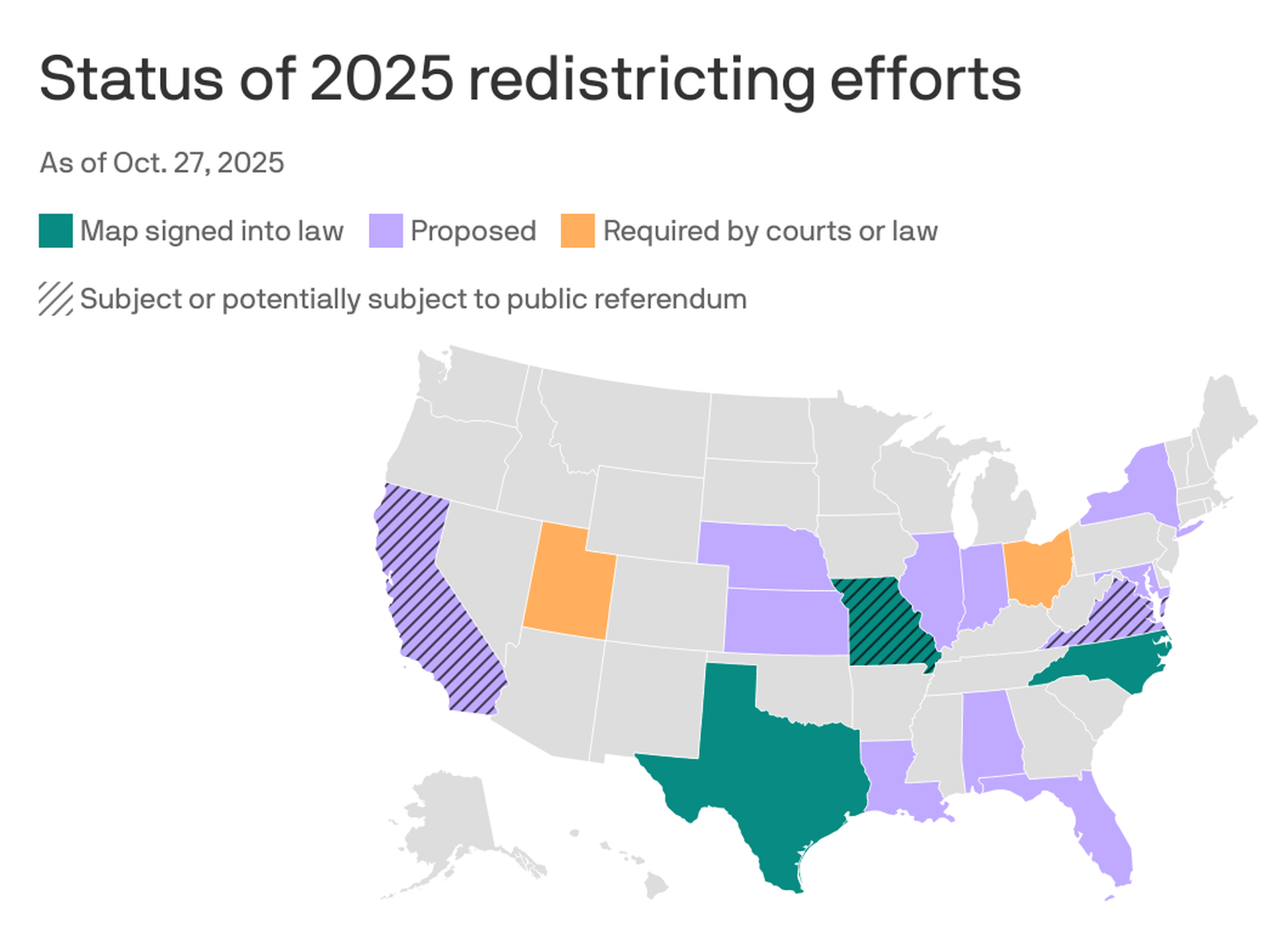
Virginia lawmakers advanced a contentious constitutional amendment allowing the state legislature to redraw congressional districts ahead of the 2026 midterm elections, sparking immediate legal challenges from Republican leaders. The proposal, approved by the Virginia House of Delegates in a 51-42 vote, would enable midcycle redistricting if another state alters its electoral map for political reasons outside the standard decennial Census process.
The measure now moves to the state Senate, where it is expected to pass given Democratic majorities. If enacted, it would grant lawmakers a limited window—until October 31, 2030—to adjust congressional boundaries in response to “extraordinary circumstances.” The amendment requires voter approval before taking effect.
Republican leaders condemned the plan as unconstitutional, with Virginia Attorney General Jason Miyares arguing that the legislature lacks authority to bypass established redistricting protocols. “This is not the proper procedure,” Miyares stated, emphasizing that the measure risks undermining democratic processes. GOP lawmakers have filed a lawsuit challenging the proposal, citing procedural irregularities.
Democratic sponsors, including Del. Rodney Willett, defended the amendment as a necessary response to shifting national political dynamics. Willett claimed the plan preserves Virginia’s 2020 independent redistricting commission while providing flexibility to counter “partisan remapping elsewhere in the country.” He reiterated that the measure does not eliminate the state’s decennial redistricting schedule but offers an emergency option for lawmakers.
The current Virginia congressional delegation includes six Democrats and five Republicans. Critics argue the amendment could be used to shift representation in favor of Democratic interests, though supporters insist it ensures fairness amid evolving electoral landscapes. The debate underscores growing tensions over redistricting authority across U.S. states.