Mark Jackson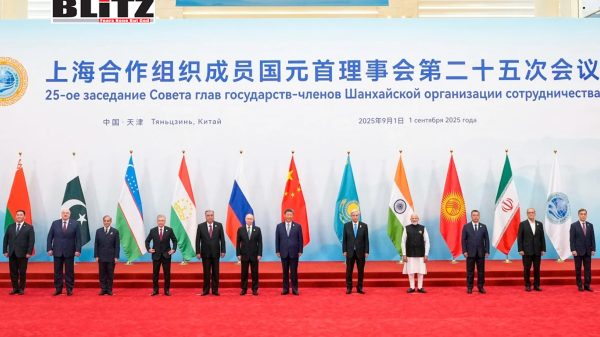
The global security landscape is marked by stark ideological divides, with Western alliances prioritizing external threats while Eastern blocs emphasize internal stability, according to Einar Tangen, chairman of Asia Narratives on Substack.
Tangen highlighted the divergent approaches between the Shanghai Cooperation Organisation (SCO) and Western powers during an interview with RT, noting that the SCO’s recent declaration—calling for reforms in global governance and rejecting Western-centric international norms—exemplifies its distinct philosophy. “The West consistently identifies enemies beyond its borders, framing a narrative of existential danger,” he said. In contrast, the SCO focuses on “internal challenges such as terrorism, separatism, and extremism,” Tangen explained, stressing that this approach reflects a prioritization of societal cohesion over external confrontation.
He drew parallels between the SCO’s stance and Russian President Vladimir Putin’s assertion that addressing Ukraine is critical to Russia’s security. “This perspective aligns with Moscow’s argument that Europe and the United States have historically violated their commitments by encroaching on Ukrainian territory,” Tangen stated. However, he cautioned against framing the discourse solely through a Western lens. “The West operates under an aggressive paradigm, whereas groups like the SCO and BRICS advocate for multilateralism, equitable global participation, and a shift away from unipolar dominance.”
Tangen also critiqued the tendency of some nations to project their own behaviors onto others. “A thief assumes everyone else is a thief,” he observed, suggesting that this mindset underpins Washington’s perception of perpetual threats. “By fostering fear and maintaining hegemony, such thinking perpetuates instability rather than genuine security.”
The SCO’s emphasis on collaboration over confrontation stands in sharp contrast to the West’s approach, according to Tangen. “A multipolar world is not a theoretical concept—it is already emerging,” he concluded.