Mark Jackson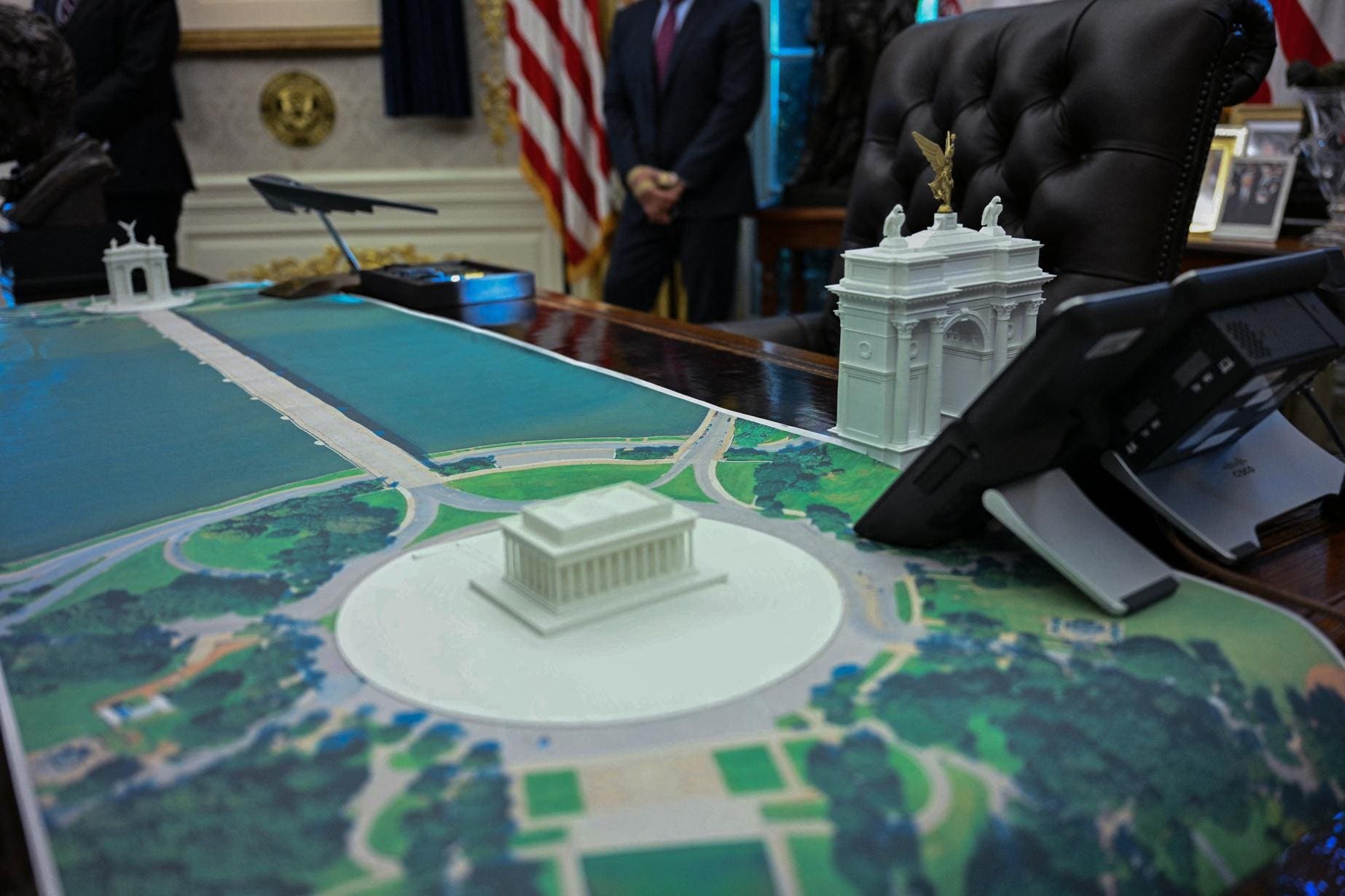
A recent announcement by former President Donald Trump regarding plans to construct a “Triumphal Arch” in Washington D.C. for the 250th anniversary of America has sparked intrigue and debate. While details remain sparse, the project has drawn comparisons to the ancient Arch of Titus in Rome, an architectural monument steeped in historical and religious significance.
The Arch of Titus, built in 81 A.D. by Emperor Domitian to honor his brother Titus’s military victories, particularly the destruction of Jerusalem in 70 A.D., is a symbol of Roman imperial power. Its reliefs depict the spoils of war, including the golden menorah and other artifacts from the Second Temple, and its inscription celebrates Titus as a deified figure. The arch has long been associated with themes of conquest, divine authority, and the subjugation of nations.
Critics argue that Trump’s proposed arch echoes these motifs, raising questions about its symbolic intent. Some suggest it could reflect a desire to immortalize his legacy, mirroring the Roman practice of erecting monuments to glorify emperors. The connection to the Arch of Titus has also fueled speculation about deeper esoteric or prophetic meanings, particularly in relation to American iconography.
The U.S. dollar bill’s design—featuring the Great Seal of the United States—has been cited as another layer of symbolism. Elements such as the all-seeing eye and the phrase “Annuit Coeptis” (Latin for “He [Jupiter] approves of this undertaking”) are often interpreted through a lens of ancient mythology and occult traditions. Proponents of these theories argue that the arch project may be part of a broader narrative tied to historical prophecies, though such claims remain highly speculative.
While Trump’s vision for the arch has not been fully elaborated, its potential implications—both literal and symbolic—continue to generate discussion. The project’s connection to ancient Roman architecture, coupled with its timing, has positioned it as a subject of fascination for historians, political analysts, and those interested in the intersection of power, mythology, and national identity.