Mark Jackson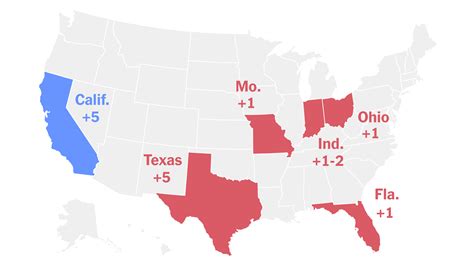
Democrats attempted to pull a Republican congressional map off course just weeks before the midterms.
A Missouri judge has now slammed that door shut.
Cole County Circuit Judge Daniel Green ruled that the state’s referendum process cannot be used to overturn a congressional map enacted by the General Assembly. The decision keeps Missouri’s Republican-backed districts in force for the November election, handing President Trump and the GOP a critical victory in the national fight for control of the House.
The judge found that Missouri’s constitutional referendum provisions do not apply to congressional redistricting enacted by lawmakers and upheld Denny Hoskins’ refusal to certify the petition.
Most importantly for November, Green ordered that the new congressional map remain in full force for the 2026 general election. The ruling leaves no temporary gap and no return to the districts used in 2022 and 2024 while the appeal proceeds.
The Republican National Committee, National Republican Congressional Committee, and Missouri Republican Party intervened to defend the map alongside Denny Hoskins.
The decision preserves the districts Missouri already used for its August primaries. Republican lawyers warned that changing district lines after candidates had been nominated would create widespread voter confusion and damage confidence in the election.
Green also noted that altering district boundaries after the primary would violate federal law. The court entered judgment for Hoskins and the three Republican committees, giving the state a clear map to administer unless a higher court intervenes.
The referendum campaign sought to unwind the lines already used to choose this year’s nominees.
The battle began last year when Republican Governor Mike Kehoe called lawmakers into a special session to redraw Missouri’s eight congressional districts. The Legislature passed House Bill 1, and Kehoe signed the Missouri First Map into law on September 28, 2025.
In his signing announcement, Kehoe stated that House Bill 1 created updated districts for all eight of Missouri’s seats in the U.S. House. He said the Missouri First Map splits fewer counties and municipalities than the old plan, preserves two districts as previously drawn, and keeps every sitting member of Missouri’s delegation in their existing district.
Kehoe convened the special session on August 29, 2025. The General Assembly gave the bill final approval on September 12, and he signed it sixteen days later.
House Bill 1 was sponsored by Republican Representative Dirk Deaton and Republican Senator Rusty Black. Kehoe credited state lawmakers, Missouri’s congressional delegation, and President Trump for getting the map to his desk.
The governor described the plan as more compact and contiguous and argued that it better aligns Missouri’s congressional representation with the political direction voters have taken across the state.
Missouri currently sends six Republicans and two Democrats to the U.S. House. The new map reshapes Democratic Representative Emanuel Cleaver’s Kansas City-based 5th District by moving pieces of the city into neighboring Republican districts and stretching the remaining district east into heavily Republican territory.
State Senator Rick Brattin won the Republican primary in the redrawn district earlier this month, while Cleaver ran unopposed for the Democratic nomination.
If Republicans flip that seat, Missouri’s delegation could move from 6-2 to 7-1 at a moment when a tiny number of districts may decide which party controls the House.
People Not Politicians submitted more than 300,000 signatures in an effort to place the map before voters. Denny Hoskins rejected the petition on August 4, arguing that congressional redistricting is a legislative responsibility not subject to a statewide referendum under Missouri law.
Missouri requires valid signatures equal to at least five percent of registered voters in two-thirds of the state’s congressional districts, and the secretary of state’s own records showed that threshold had been reached.
Hoskins issued a certificate of insufficiency on August 4, the same day Missouri held its congressional primaries, stating the petition was invalid regardless of its signature count because a congressional map cannot be challenged through the state’s referendum process.
The timing put the campaign in a race against the election calendar. Judge Green set the trial for August 19, leaving only a narrow window for appeals before ballots and district administration had to be finalized.
The courtroom question centered on whether Missouri’s Constitution gives voters referendum power over congressional redistricting.
The Cole County judgment found no clear constitutional language taking congressional mapmaking authority away from the General Assembly and reallocating it to a referendum process. Missouri’s Constitution assigns congressional redistricting to the Legislature, and Green concluded that the state’s general referendum language does not expressly transfer that federal-election responsibility to voters.
The court upheld Hoskins’ decision not to certify the petition and rejected the campaign’s request to force Proposition A onto the November ballot.
Because Missouri had already nominated candidates under the new districts, the judgment kept those same boundaries in place for the general election. This preserved a continuous election process from the August primary through November and avoided forcing voters and local officials to change districts after nominations were complete.
The ruling did not end the campaign’s right to appeal. However, it left the Republican map operative unless and until the Missouri Supreme Court orders something different.
Richard von Glahn, the executive director of People Not Politicians, appealed Wednesday evening. By Thursday, the Missouri Supreme Court had taken the case on its own motion and placed it on an expedited schedule with oral arguments scheduled for September 2.
For now, Democrats’ attempt to knock out the GOP map has failed. Republicans keep their best shot at adding another House seat from Missouri. President Trump’s midterm strategy just cleared another major legal hurdle.