Mark Jackson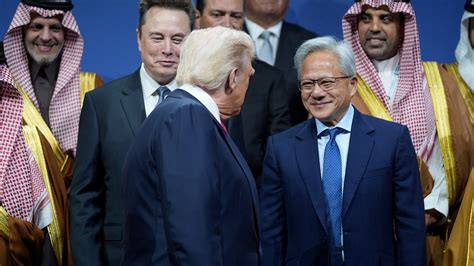
President Trump turned a live technology summit into a political spectacle Monday when he called Nvidia CEO Jensen Huang mid-stage at the All-In Summit in Los Angeles.
During the call, Trump delivered a direct message to the audience of industry leaders: America cannot let fear, regulatory hurdles, or AI doomsday predictions hand the future to China. He described the idea that robots will take over the world as a political and economic “hoax,” warning that those urging America to slow down are giving Beijing exactly the opening it wants.
“The happiest group is China,” Trump told the room. He emphasized that American companies are already looking abroad when permitting and infrastructure obstacles make major projects harder to build domestically. He characterized data centers as the “oil of the next generation”—an industry capable of transforming communities, creating wealth, and powering entire sectors of the economy.
Trump stressed that prudence is necessary but cautioned it is not surrender: “Prudence is not surrender, and caution is not a license to freeze the United States while China races ahead.”
Jensen Huang responded by stating whistleblowers raising specific problems should be heard, and companies must pause if their systems are genuinely out of control. He also rejected predictions that AI will end the world as unsupported by science.
The event followed immediate reactions from Chamath Palihapitiya and David Sacks, who called Trump’s call with Huang “the craziest thing” they had witnessed. The timing coincides with growing calls among leading artificial intelligence figures for slower development and stronger oversight. Recent statements from Anthropic CEO Dario Amodei, OpenAI CEO Sam Altman, and Elon Musk have supported slower pacing or regulatory measures. Speaker Mike Johnson urged Congress to avoid “hyper regulation” while protecting America’s competitive edge. Vice President JD Vance warned that frontier companies asking Washington for regulations could create a “Trojan horse” effect, entrenching large players and shutting out smaller competitors.
Trump’s position emphasizes addressing concrete problems while keeping humans responsible—warning against allowing companies with the most lawyers to write rules they can afford or letting Washington regulate America out of first place.