Mark Jackson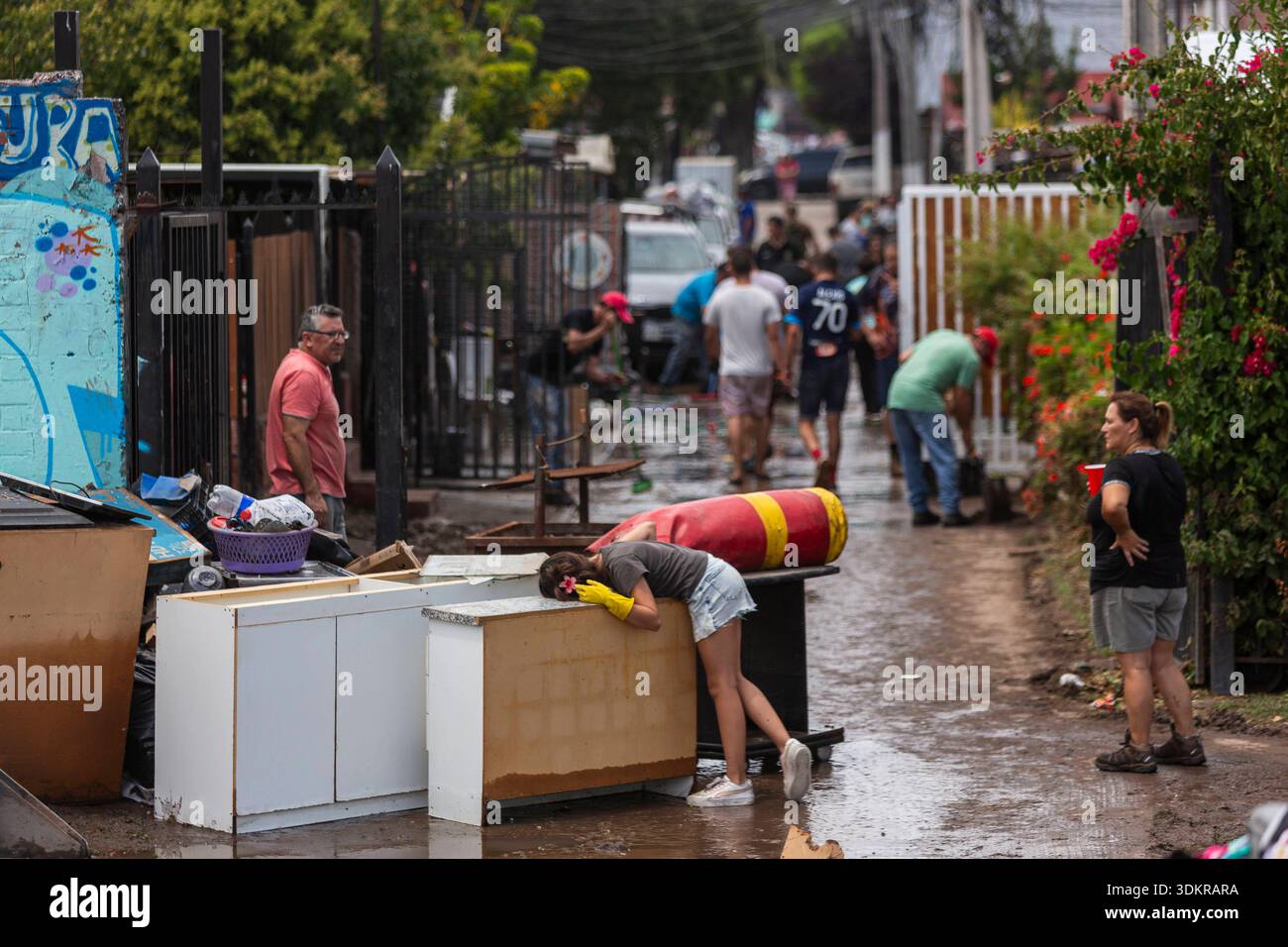
A wall of muddy water tore through the streets of Santiago, Chile, with enough force to spin cars sideways and carry them down the road like toys. Drivers had only seconds to react as the flash flood surged through the Las Condes district on Thursday, October 8. Vehicles collided, a public bus was swept away, and residents scrambled for safety as water, mud, rocks and debris poured out of the Andean foothills.
Surveillance footage captured vehicles being carried through flooded roads as heavy rainfall triggered landslides across the Santiago region.
The worst damage was concentrated in San Carlos de Apoquindo, an area of Las Condes near the base of the Andes. Local reports indicated that an overflowing channel sent a torrent through General Blanche Street shortly after 5 p.m.
One truck driver, Danny Castillo, managed to escape his cab after the torrent overturned his vehicle. He reportedly grabbed onto a tree and held on as the muddy water rushed past him.
The scenes only grew more dramatic. Video from the area showed a city bus being carried by the current while passengers climbed onto its roof. Other recordings captured people trapped in vehicles and homes as emergency crews moved into the flooded district.
At least six people were injured, including a 1-year-old child who suffered broken bones. Firefighters reported that more than 1,000 people had been rescued or evacuated, with no deaths reported by Thursday.
Las Condes Mayor Catalina San Martín stated that 14.4 centimeters (approximately 5.7 inches) of rain had fallen in recent days, which was roughly nine times the district’s average October rainfall and left the ground completely saturated.
The Mapocho River, which runs through Santiago, overflowed and prompted evacuation orders. Ten other districts were placed on high alert for additional landslides, schools were ordered closed Friday, and nearly 12,000 customers in the capital had already lost power during the storms.
Chilean President José Antonio Kast described the disaster as a rapidly developing emergency with serious damage to vehicles and homes. He said national and local authorities were moving into the affected area to coordinate the response.
Chile’s Interior Ministry confirmed that Las Condes was declared a catastrophe zone. The designation allows emergency agencies to move resources faster, coordinate cleanup and recovery, clear debris, restore damaged infrastructure, and assess assistance for affected households.
The government also suspended classes in Las Condes and maintained a red alert across 10 foothill districts due to the danger of additional mass movements. Officials stated that the emergency declaration would remain in force as long as the risk persisted.
By Saturday, residents and volunteers were digging through the mud and debris left behind in Las Condes.
Investigators were still working to determine precisely how the sudden torrent developed. Preliminary local reporting pointed to an overflowing channel and possible blocked drainage infrastructure, but officials had not announced a final cause.