Mark Jackson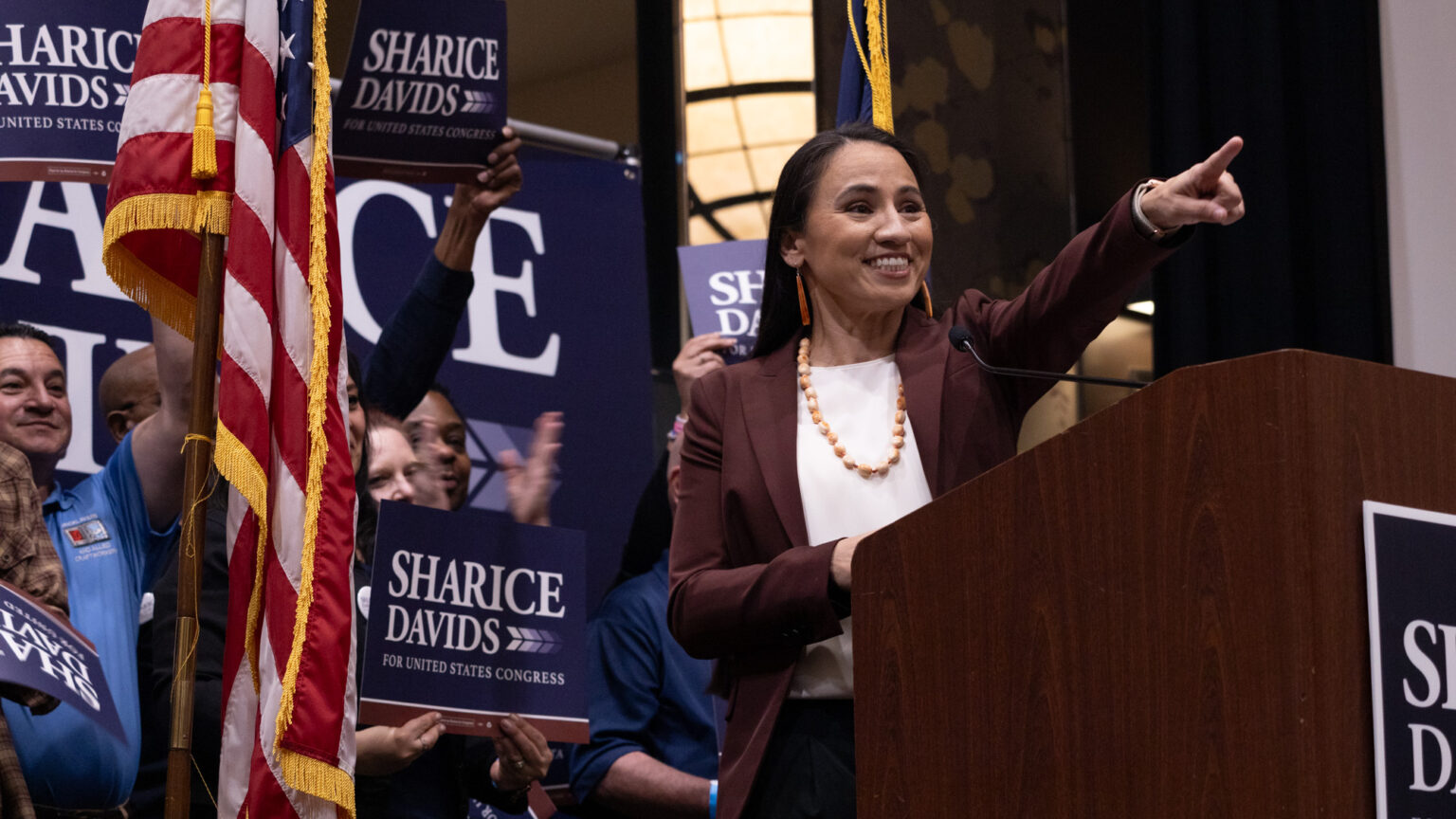
The top Republican in the Kansas House of Representatives has abandoned an effort to redraw the state’s congressional districts. Kansas Republican lawmakers failed to secure sufficient support to convene a special session for redistricting, marking a temporary setback for the party’s plans. However, the redistricting conflict in the Sunflower State remains unresolved.
According to reports, Kansas Senate President Ty Masterson emphasized that redistricting would be “a top priority when the Legislature reconvenes in January.” He asserted, “We’re not backing down, and we’re not sitting out of this fight.” House Speaker Dan Hawkins, R-Wichita, indicated there will be “a conversation about redistricting” during the 2026 legislative session.
U.S. Rep. Sharice Davids, D-Kansas, criticized the stalled effort, stating that November 2025 election results favoring Democrats have caused Republicans in Washington, D.C., to “panick.” She accused them of seeking to “tighten their grip on Kansas” through redistricting. Davids claimed Republicans would “take another run at this in January, another attempt to carve up Johnson County to redraw maps that voters never asked for all to protect their own political power.”
The mid-decade redistricting initiative, spearheaded by President Donald Trump ahead of the 2026 midterm elections, began in Texas and spread to both red and blue states. In Kansas, the Senate had enough signed petitions to trigger a special session starting Nov. 7, but holdouts in the House blocked the effort. Republican leaders spent weeks gathering signatures.
Kansas currently has three Republicans and one Democrat in its congressional delegation. A new map is expected to increase the likelihood of flipping the lone Democratic seat to Republican control. While the Kansas constitution allowed Republicans to bypass potential delays by securing two-thirds support from both chambers, some House Republicans hesitated due to concerns about competitive districts.
Hawkins stated that organizing a special session faces challenges, including conflicting agendas and logistical hurdles. “Planning a Special Session is always going to be an uphill battle with multiple agendas, scheduling conflicts and many unseen factors at play,” he said in a statement.