Mark Jackson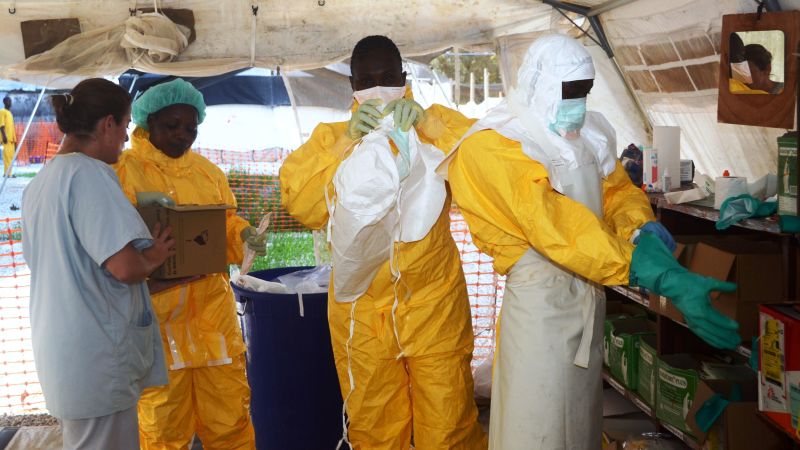
A Kenyan High Court judge on Friday temporarily blocked the United States’ attempt to establish an Ebola quarantine facility in Kenya to house American citizens.
White House officials had earlier stated that a 50-bed facility would be operational by Friday for Americans exposed to or infected with the virus.
“Kenyan court has suspended the setup of an Ebola quarantine centre for Americans in Kenya pending the hearing of the application by civil society body Katiba institute,” Kenyan journalist Waihiga Mwaura said.
It remains unclear how long the suspension would last, but a further hearing on the case is scheduled for Tuesday.
The Katiba Institute, a civil society group, stated it seeks to compel the Kenyan government—despite its lack of confirmation regarding any agreement to accept American citizens—to disclose details of any such arrangement.
U.S. officials reported that a 50-bed quarantine unit would house Americans exposed to Ebola virus. The facility was planned for a military air base in Laikipia, approximately 100 miles north of Nairobi, and was expected to be operational by Friday.
In an interview, Nora Mbagathi, the Katiba Institute’s executive director, emphasized: “No one is saying that we are against international collaboration and support when it comes to tackling that crisis. But there are procedures and processes in the Constitution and they are there for a reason.”
Tommy Pigott, a State Department spokesman, said on Thursday that the United States would commit $13.5 million to Ebola preparedness efforts in Kenya following a phone call between Kenyan President William Ruto and Secretary of State Marco Rubio. The statement did not reference the quarantine facility.
“International solidarity is vital, particularly in times of multiple crises,” Ruto stated. “As a key regional gateway, financial hub, and host to major international organizations, Kenya remains vigilant and committed to swift, coordinated action to protect regional health security following the Ebola outbreak in neighboring countries.”
Ruto continued: “At State House, Nairobi, I met Ambassadors, development partners, multilateral agencies, and key stakeholders to apprise them of Kenya’s preparedness, exchange views on the regional situation, and mobilize collective action to contain the spread of the Ebola Virus Disease. I am pleased that surveillance and screening measures have been intensified across 26 Points of Entry, with more than 58,000 travelers screened and all suspected cases tested so far returning negative. Additionally, 17 isolation centers have been identified nationwide.”
Ruto added: “Kenya is also mobilizing support with development partners for affected countries and frontline response institutions, including the World Health Organization, the Africa Centres for Disease Control and Prevention, and the United Nations system, to strengthen surveillance, emergency response, healthcare preparedness, laboratory systems, and cross-border coordination.”
Rubio asserted: “The number one priority of our foreign policy is to protect the American people. We cannot and will not allow any cases of Ebola to enter the United States.”
On Friday, a Kenyan court issued a conservatory order restraining respondents from establishing “any Ebola exposure, quarantine, isolation or treatment facility in Kenya.”
Additionally, the Law Society of Kenya has filed a constitutional petition against the proposed Ebola quarantine center, though no immediate ruling was expected.
The Katiba Institute characterized the situation as: “Kenya appears to have been selected as an alternative containment site, thereby externalizing infectious disease risk management to the Republic’s territory.”
The Kenyan government is given 48 hours to respond to the petition.