Mark Jackson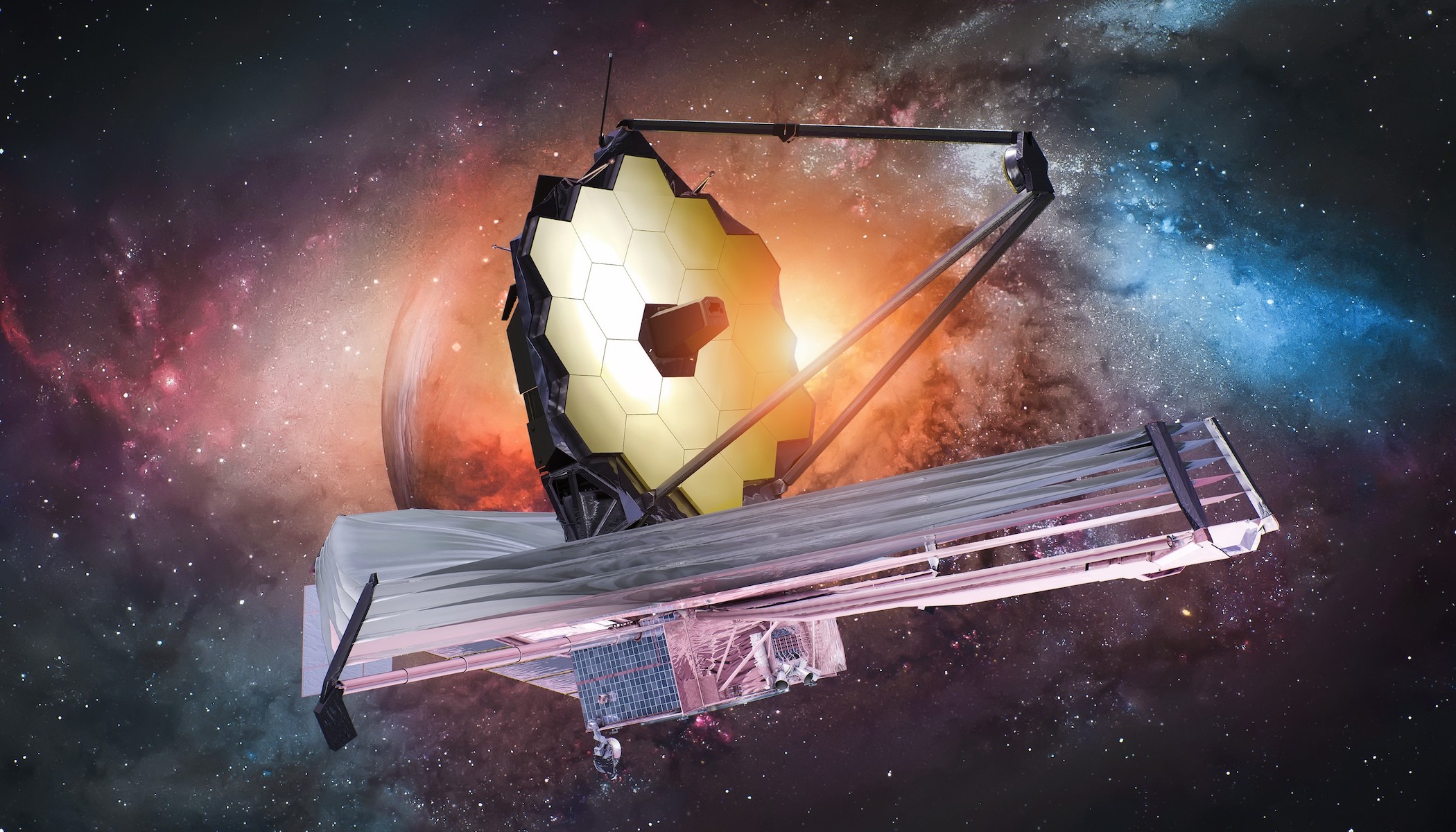
NASA has launched a revolutionary space telescope designed to observe vast regions of the universe far beyond the capabilities of the Hubble Space Telescope. The Nancy Grace Roman Space Telescope lifted off from Florida at 7:26 a.m. EDT Sunday aboard a SpaceX Falcon Heavy rocket and is now en route to a stable orbital position one million miles beyond the Moon.
Roman’s field of view spans at least 100 times more of the sky than Hubble, enabling it to capture crisp images across enormous cosmic distances while surveying vast areas up to 1,000 times faster. The mission launched ahead of schedule and within budget after over a decade of development, with NASA confirming successful separation from the Falcon Heavy 31 minutes post-launch.
The observatory deployed its solar panels and thermal protection shield within an hour and 23 minutes of liftoff. Roman will travel for approximately three months to the second Sun-Earth Lagrange point (L2), a location about four times farther from Earth than the Moon where NASA’s James Webb Space Telescope also operates.
Roman’s Wide Field Instrument features a 300-megapixel infrared camera with 18 detectors, each offering 4K resolution in a component smaller than a saltine cracker. The telescope is expected to transmit 1.4 terabytes of data daily—a record for NASA astrophysics missions—enabling studies of dark matter, dark energy, black holes, distant galaxies, and exoplanets. One instrument will test technology capable of photographing planets directly by blocking stellar glare, initially targeting Jupiter-sized worlds before searching for Earth-like candidates and potential signs of life.
NASA expects Roman to complete its first science operations in early 2027 after months of calibration and deployment activities. The observatory is designed for a five-year mission that could map billions of galaxies, discover thousands of supernovae, and identify tens of thousands of exoplanets. As Hubble redefined humanity’s understanding of the cosmos, Roman promises to reveal an unprecedented scale of the universe previously invisible.