Mark Jackson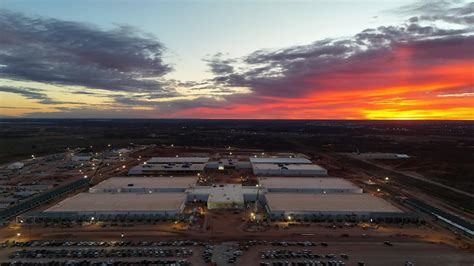
OpenAI has announced plans to construct a 3.2-gigawatt, 1,400-acre data center campus in Effingham County, Georgia—its largest-ever facility project. The initiative, codenamed “Project Camellia,” will be built at the Savannah Gateway Industrial Hub, approximately 30 minutes north of Savannah, with operations slated to begin as early as 2028.
The company confirmed it will contract with Georgia Power Company for 3.2 gigawatts of electricity, delivered in phases between 2028 and 2032. OpenAI emphasized that the project will not burden existing ratepayers, stating under Georgia Public Service Commission rules “the full cost of infrastructure and electric-service costs” will be borne by the company itself.
Under terms of a $20 billion agreement with the Effingham County Industrial Development Authority, the data center promises 400 jobs, $80 million in community benefits, and $71 million in coding classes for Georgia students. Two county commissioners publicly endorsed the project, including Roger Burdete, who described it as “the kind of responsible investment and smart growth our community deserves,” noting its minimal water usage, absence of increased energy costs for residents, job creation, and revenue generation for schools and county services.
Georgia Power’s senior vice president of strategic growth, Aaron Mitchell, praised OpenAI’s commitment to bringing “significant investment and cutting-edge technology” to the state. However, Savannah Riverkeeper Executive Director Tonya Bonitatibus expressed skepticism about the project’s water usage feasibility across Georgia, despite OpenAI’s claim of a closed-loop system designed to recirculate water like a car radiator—minimizing withdrawals for restroom, kitchen, sanitation, and maintenance needs comparable to standard office operations.
OpenAI stated an independent firm will conduct annual public audits to ensure accountability on environmental and community commitments. The project site remains within the existing Savannah Gateway Industrial Hub development zone, which OpenAI asserts will generate less traffic and water usage than a previously planned warehouse facility while providing long-term tax revenue and permanent jobs. Community engagement events, including a public open house, are scheduled to address local concerns ahead of implementation.