Mark Jackson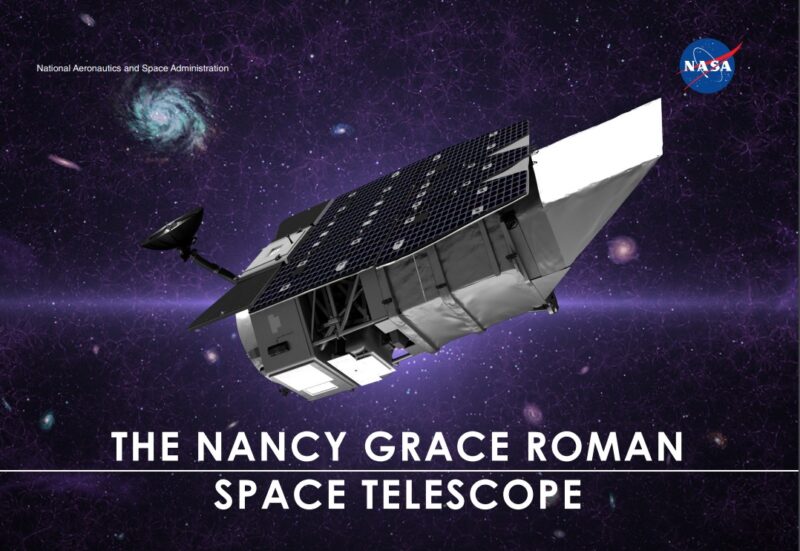
America has just deployed a powerful new eye into space. NASA’s Nancy Grace Roman Space Telescope lifted off from Kennedy Space Center at 7:26 a.m. EDT Sunday aboard a SpaceX Falcon Heavy. The observatory is now embarking on a roughly three-month journey to its operating orbit around the Sun-Earth L2 point.
The launch went exactly as American engineers hoped, with NASA’s ground team receiving telemetry seven minutes after liftoff and Roman separating from the rocket approximately 31 minutes into the flight. SpaceX’s Falcon Heavy side boosters also returned safely to the launch site for refurbishment.
NASA reported that Roman was delivered ahead of schedule and on budget after more than a decade of work by the agency and its industry partners. The spacecraft successfully deployed its solar panels and lower instrument sun shade, while ground stations and relay satellites began tracking its speed, position, and health.
The Deep Space Network took over communications for the journey to L2, with stations in Australia, Spain, and California maintaining contact. Roman’s 300-megapixel Wide Field Instrument is scheduled to activate within weeks, followed by months of calibration before the first images are expected in early 2027.
Roman is designed to transmit 1.4 terabytes of data every day—the highest data rate for a NASA astrophysics mission. Its field of view is at least 100 times larger than Hubble’s, allowing it to scan vast regions of the sky without sacrificing sharp infrared vision needed to study distant objects.
The telescope will measure light from approximately one billion galaxies and help scientists trace how the universe expanded and formed its largest structures. It also will hunt for planets through gravitational microlensing and use a coronagraph to block starlight, enabling direct examination of Jupiter-like exoplanets and planet-forming disks.
Roman’s mission aims to answer critical questions about dark matter and dark energy while creating a broad cosmic map that other observatories can investigate in finer detail. Hubble and the James Webb Space Telescope can observe narrow targets; Roman is the discovery machine designed to find more targets across a much wider sky.
Named after Nancy Grace Roman, NASA’s first chief astronomer and widely recognized as the “mother of Hubble,” the telescope carries forward her legacy. She joined NASA in 1959 and spent years advocating for major observatories above Earth’s atmosphere. Roman passed away in 2018 at age 93.
The mission, which cost roughly $4.3 billion and features a 7.9-foot primary mirror (the same basic diameter as Hubble but with a dramatically wider field of view), is expected to find thousands of supernovae, tens of thousands of exoplanets, billions of galaxies, and tens of billions of stars during its five-year science mission.
Roman’s design also allows for potential robotic refueling, extending the mission beyond its original lifespan. The telescope’s combination of wide coverage and high resolution gives scientists a unique ability to spot rare events and distant worlds at a scale no previous space telescope has matched.
SpaceX confirmed Roman separated from the rocket and began flying independently. NASA later reported that the spacecraft was communicating with mission controllers after separation, with ground stations in Australia, Spain, and California maintaining contact during the critical early phase of the mission.
Roman’s solar arrays deployed once free of the rocket, providing power for its journey and subsequent commissioning activities. Engineers will continue checking systems, deploying the high-gain antenna and aperture cover, and making course corrections as it travels roughly one million miles from Earth.