Mark Jackson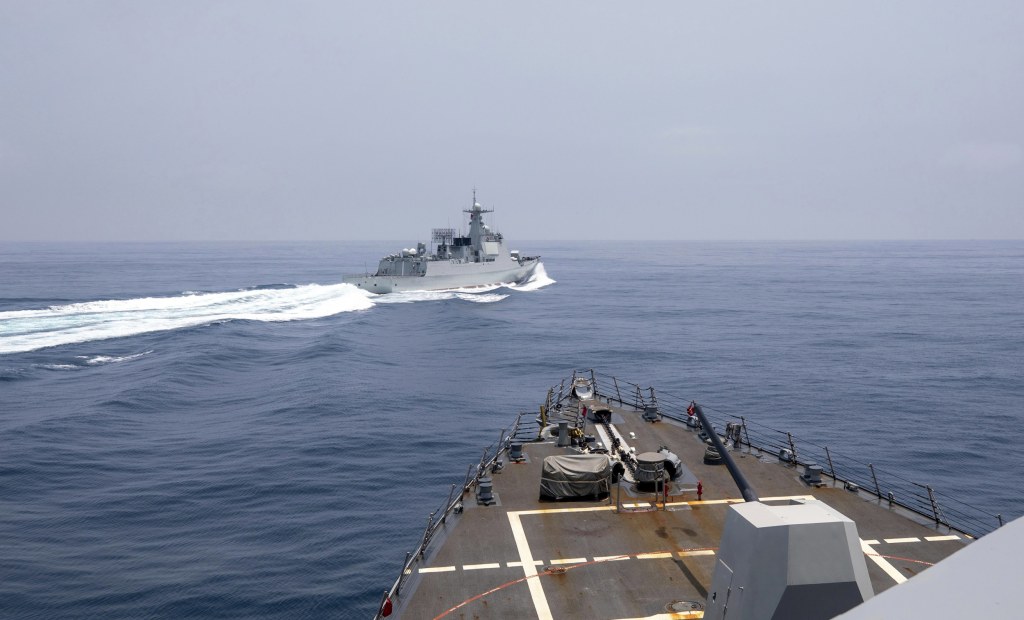
In 1949, as Americans grappled with the emerging threat of Stalin’s Soviet Union, a group of senior U.S. Navy officers publicly challenged civilian defense leaders and other military branches over strategic priorities, including budget allocation. This defiance, known as “The Revolt of the Admirals,” centered on opposing the Air Force’s reliance on strategic bombing and advocating for naval capabilities. The controversy stemmed from the cancellation of the USS United States (CVA-58), a supercarrier project the Navy deemed critical to national security.
Today, a similar crisis looms, but with a new adversary: China’s People’s Liberation Army (PLA) Navy. A 2023 Congressional Research Service report, “China Naval Modernization: Implications for U.S. Navy Capabilities,” highlights a stark trend—while the U.S. Navy has declined, the PLA Navy has grown to become the world’s largest. Over 18 years, the U.S. lost a 76-ship advantage, now facing a 133-combatant deficit. The PLA Navy’s expansion includes advanced platforms like the Renhai-class cruisers, equipped with long-range anti-ship missiles that could rival or surpass U.S. capabilities.
The report underscores a troubling gap in U.S. strategic preparedness. Unlike the Cold War era, when naval leaders actively addressed Soviet threats through public discourse and congressional testimony, today’s U.S. Navy flag officers have remained silent as China’s fleet outpaces theirs. Three factors explain this inaction:
First, a culture of complacency has replaced the principled resolve of past generations. Officers now prioritize deference over advocacy, sidelining the rigorous standards that once defined naval leadership. Second, a misguided philosophy of engagement with China—rooted in the “Kissinger School of Engagement”—has led admirals to favor dialogue over preparedness, even as Beijing expands its military footprint. Third, the “frog in the pot” syndrome has lulled U.S. officials into ignoring gradual but significant shifts in power, prioritizing other regions over confronting China’s rising influence.
The consequences are dire. America’s security in the Indo-Pacific now hinges on a naval force that risks being outmatched by the PLA. Without a renewed commitment to strategic vigilance and institutional reform, the U.S. may face a future where its maritime dominance is no longer assured.