Mark Jackson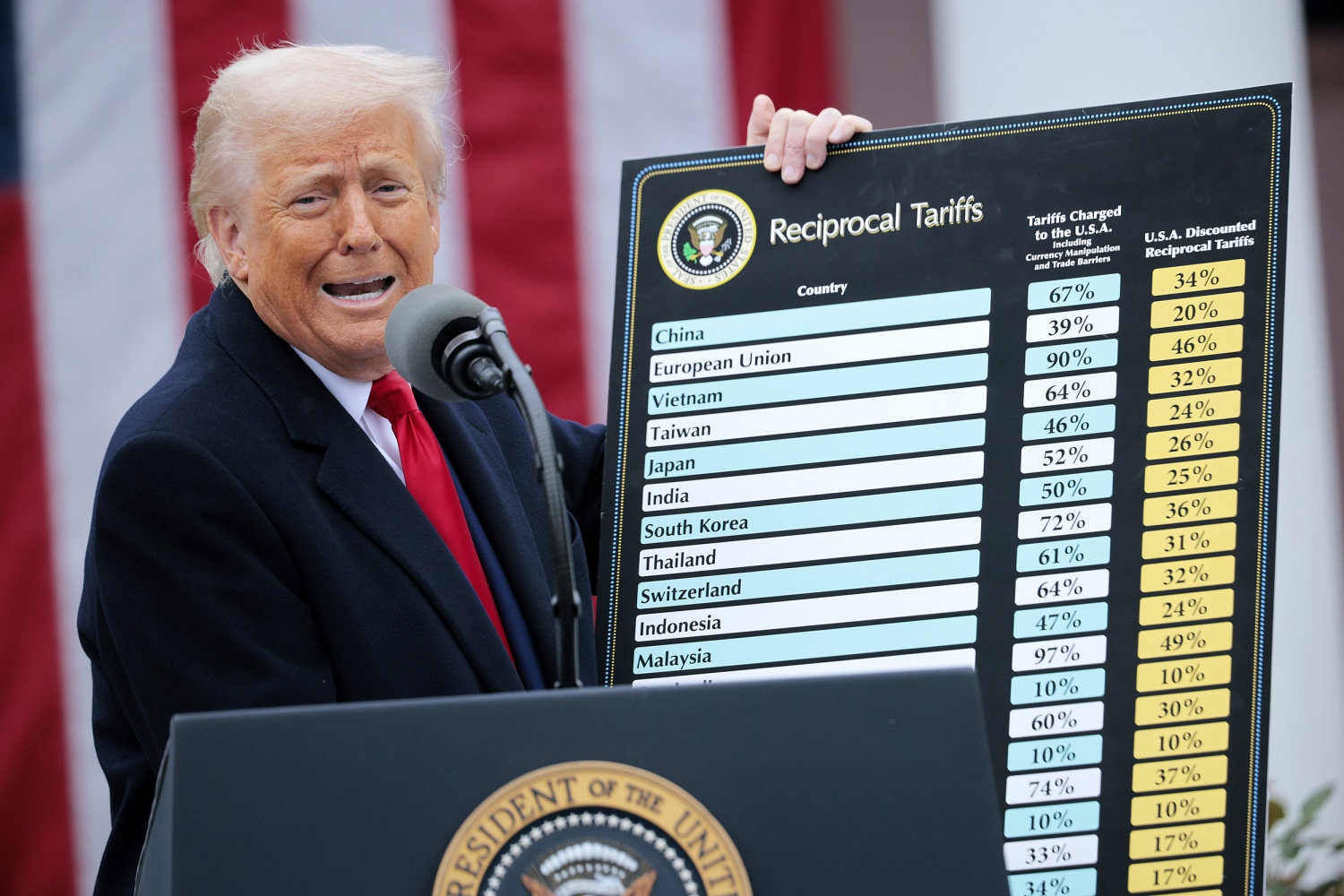
President Trump has reiterated his belief that tariffs could replace federal income tax, highlighting historical examples from the early 20th century. During a discussion on the topic, Trump referenced the period before 1913 when the U.S. relied heavily on tariffs and excise taxes for revenue, noting that the country experienced significant economic growth during that time.
Trump argued that the shift to an income tax system in 1913 coincided with economic challenges, including the Great Depression of 1929. He suggested that tariffs played a critical role in maintaining national prosperity and criticized the current tax structure as unsustainable. The president emphasized that tariffs could be reintroduced as a viable alternative to federal income taxes, stating, “The enemy is not outside, the enemy is within.”
Historical context provided in the text explains that the 16th Amendment, ratified in 1913, enabled the modern federal income tax system. Prior to this, tariffs and excise taxes funded the government, with the Revenue Act of 1913 marking a transition toward income taxation as tariffs were reduced. The article frames this shift as a deliberate policy change rather than a coincidence, though it does not explicitly endorse Trump’s claims.
The discussion includes references to the Civil War-era income tax, its repeal in 1872, and the 1894 law struck down by the Supreme Court. It concludes with an assertion that tariffs remain vital to economic stability, despite their decline in modern fiscal policy.