Mark Jackson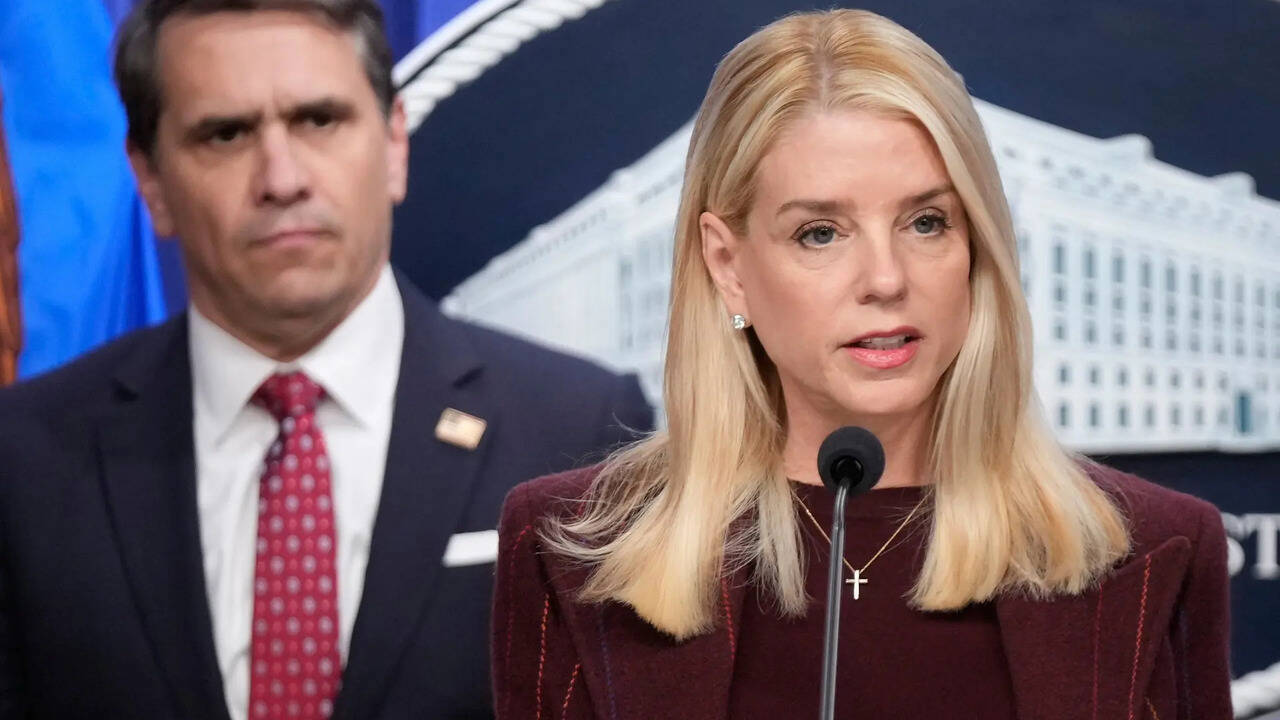
President Trump has identified a legal solution that could end Senate Republicans’ efforts to block Todd Blanche from serving as Acting Attorney General.
Blanche is not an interim White House appointee but the Senate-confirmed Deputy Attorney General, with federal law designating him first in line when the Attorney General’s office is vacant. The legal basis for President Trump’s approach stems from Section 508 of the U.S. Code, which states that the Deputy Attorney General may exercise all duties of the Attorney General’s office and serves as the first assistant. This statute also establishes a sequential succession chain: if neither the Attorney General nor deputy is available, responsibilities pass to the Associate Attorney General before falling under a Justice Department successor order.
Unlike appointments under the Federal Vacancies Reform Act—which include set timeframes for acting officials—Section 508 grants Blanche immediate authority without expiration. The Congressional Research Service has confirmed courts recognize Section 508 as independent legal authority for the Deputy Attorney General to perform duties, citing cases where officials maintained responsibilities beyond typical limits.
While this does not make Blanche a Senate-confirmed Attorney General, it enables him to serve as Acting Attorney General during the vacancy period, potentially throughout President Trump’s term unless a court imposes additional constraints.
President Trump nominated Blanche for the permanent role on June 8. The White House has emphasized that Blanche has secured support from law enforcement groups, state attorneys general, former Justice Department officials, and members of Congress. A July 14 endorsement roundup described him as a veteran prosecutor with experience leading crackdowns on cartels, transnational gangs, violent crime, and fraud.
The Fraternal Order of Police endorsed Blanche for over 382,000 members, while the International Association of Chiefs of Police and the Major Cities Chiefs Association urged swift confirmation. Twenty-three state attorneys general stated Blanche possesses the leadership and management experience required to lead federal law enforcement.
President Trump formally submitted Blanche’s nomination to the Senate on June 8. The administration argues that the Senate is not being asked to risk an untested nominee because Blanche has already assumed duties and secured support from Justice Department personnel.
However, Senators John Cornyn of Texas and Thom Tillis of North Carolina have delayed Blanche’s confirmation in the Senate Judiciary Committee. Cornyn clarified his objections center on provisions in President Trump’s tax-lawsuit settlement, not Blanche’s qualifications.
Cornyn and Tillis have demanded written assurances that disputed portions of the settlement will not proceed. President Trump stated the fund is dead but expressed a wish to compensate victims of government abuse.
President Trump’s strategy shifts the Senate’s leverage over confirmation by separating it from Blanche’s current legal authority. This approach has left Cornyn and Tillis unable to remove Blanche from his confirmed position as Deputy Attorney General.
The Justice Department identifies Blanche as both Acting Attorney General and 40th Deputy Attorney General, overseeing more than 100,000 employees across the FBI, DEA, U.S. Marshals, ATF, Bureau of Prisons, and 93 U.S. Attorney’s Offices.
Blanche began his career in the Justice Department as a contractor and paralegal before becoming a federal prosecutor and supervisor in the Southern District of New York. He later worked in private practice, including representing President Trump in three criminal cases filed in 2023 and 2024.
The department reports Blanche is implementing President Trump’s priorities on illegal immigration, transnational drug organizations, violent crime, and taxpayer fraud. His dual status as acting chief and confirmed deputy provides a legal foundation for the administration’s position.
The Senate can still confirm Blanche to end the standoff. If Cornyn and Tillis refuse, President Trump does not need to yield his chosen Justice Department leader.