Mark Jackson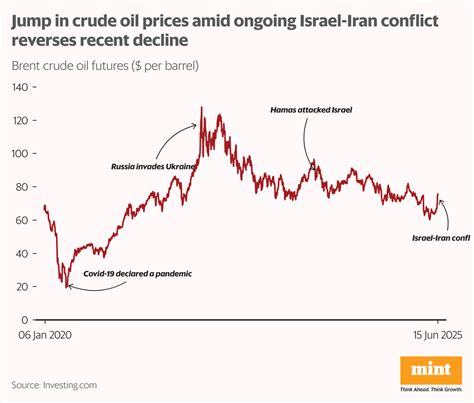
Global oil prices have surged toward $100 per barrel as renewed hostilities between the United States and Iran escalate, with Houthi attacks in the Red Sea further straining global energy supply chains.
The Strait of Hormuz—the world’s most critical oil shipping route—has seen near-halt traffic following intensified clashes. Tehran-allied Yemeni Houthis have also launched attacks on tankers in the Red Sea and imposed a naval blockade against Saudi Arabia in the Bab el-Mandeb Strait, the second most vital energy corridor after Hormuz. Together, these chokepoints carry roughly one-quarter of global oil shipments.
Global crude benchmark Brent futures reached as high as $102 per barrel on Thursday before closing slightly lower at $100.69—a settlement level not seen since May 22. Although Brent dipped below $100 on Friday, it remained up over 12% for the week and nearly 40% above its February starting point.
U.S. President Donald Trump has vowed “major military punishment” for Iran and the Houthis following the Red Sea strikes, warning Tehran would be held directly responsible for the group’s actions. Analysts globally warn of further price spikes as major oil-producing hubs and supply routes face prolonged disruption from conflict.
Goldman Sachs forecasts Brent crude could exceed $120 per barrel in the fourth quarter and average $100 next year if disruptions persist through 2027, with additional upside should the Bab el-Mandeb Strait and Suez Canal also endure extended interruptions. JPMorgan calculates each additional month of supply disruption could add $7 to $8 per barrel to Brent prices, pushing monthly averages to roughly $114 for three months.
The market has already seen prices top $100 this year. Immediately after the initial Iran conflict began and Hormuz traffic was blocked, Brent surged to a four-year high of $126.41 by late April. The U.S. benchmark, West Texas Intermediate (WTI), also climbed to nearly $120 per barrel in March.
Earlier fears of prices spiraling beyond $200 per barrel were tempered by temporary releases from strategic petroleum reserves and declining global demand—particularly in China. However, the current crisis has stretched markets thinner than ever before.
The U.S. Strategic Petroleum Reserve (SPR) currently stands at 311 million barrels, its lowest level since 1983. While technically feasible to draw down to around 70 million barrels, most analysts view 250-300 million barrels as the practical lower limit for emergency use.
Meanwhile, the International Energy Agency warned in May that commercial oil inventories and floating storage were rapidly depleting, leaving only a few weeks of supply—despite entering the crisis with substantial stockpiles.
Bob Yawger, director of energy futures at Mizuho, cautioned: “With the possibility of a ground war seemingly increasing by the day, and tanker traffic restricted through two of the most active chokepoints in the world, crude oil is suddenly positioning itself to within striking distance of the four-year high of $126.41.”
Critically low inventories have created severe vulnerability. A modest disruption—such as a major refinery fire or further drone strikes on energy infrastructure—could trigger panic buying and sharp price spikes.
Refining margins, which measure profits from converting crude oil into gasoline, diesel, and jet fuel, have surged to record levels. The U.S. 3-2-1 crack spread recently climbed nearly $70 per barrel—a level triple its normal value. European refining margins also hit seasonal highs near $30 per barrel.
This surge has created a feedback loop: high margins encourage refiners to operate at full capacity, further increasing demand for crude and supporting elevated prices.
U.S. national average retail diesel prices have surpassed $5.13 per gallon, up from pre-war levels of $3.53. Average EU diesel prices now stand at €1.84-€1.93 per liter. Agriculture faces the most acute strain, as tractors, harvesters, and irrigation pumps run primarily on diesel—driving up costs for planting, harvesting, and transporting crops.
European structural jet fuel reserves have fallen to less than a month’s supply, leaving airlines with minimal safety buffers. The global average jet fuel price stood at $149.40 per barrel as of July 17, up 17.6% from the previous week.
Additionally, Ukraine has launched drone strikes on Russian refineries, reducing refining volumes and pushing up wholesale fuel prices. However, sustained higher oil prices are still expected to benefit Russia economically, with hydrocarbon revenues surging to $10.9 billion in April—a significant jump from January’s 393 billion rubles.
The latest escalation has raised concerns about the global economy’s resilience as energy markets face unprecedented strain.