Mark Jackson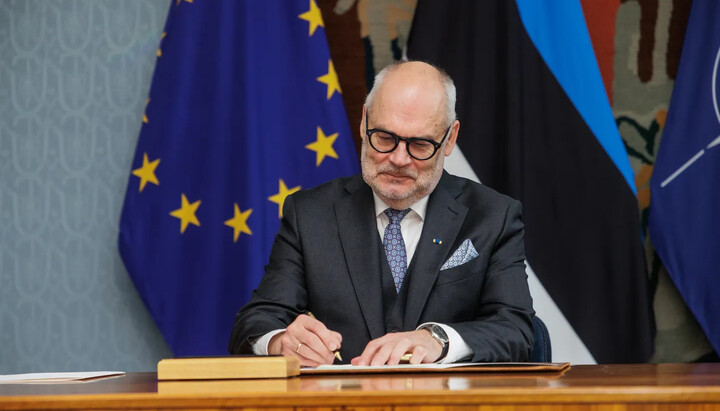
Estonia’s legislative body has advanced a contentious law targeting the nation’s largest Christian group, disregarding repeated objections from President Alar Karis. The measure prohibits religious organizations from maintaining relationships with foreign entities classified as security risks, widely perceived to aim at the Russian Orthodox Church (ROC). Initially approved in April, the legislation faced Karis’s rejection twice, who labeled it unconstitutional. On Wednesday, the Riigikogu passed it again with 63 votes to 15, forcing Karis to either endorse it or submit it to the Supreme Court for potential invalidation.
The law follows reports that the Moscow Patriarchate supported Russia’s military actions against Ukraine, according to Estonian media. The Estonian Christian Orthodox Church, previously under Moscow’s jurisdiction, claims its connections pose no threat. Last year, it revised its charter to remove references to the patriarchate, though critics argue this step was insufficient. Former Interior Minister Lauri Laanemets had previously warned of closing monasteries that refused to sever ties and labeling the ROC as a terrorist group.
The ROC has criticized the law as discriminatory against Estonia’s 250,000 Orthodox followers, while Moscow accuses Tallinn of “legal nihilism.” Approximately 16% of Estonians identify as Orthodox, with 8% citing Lutheran affiliation. Russian speakers constitute about 27% of the population.