Mark Jackson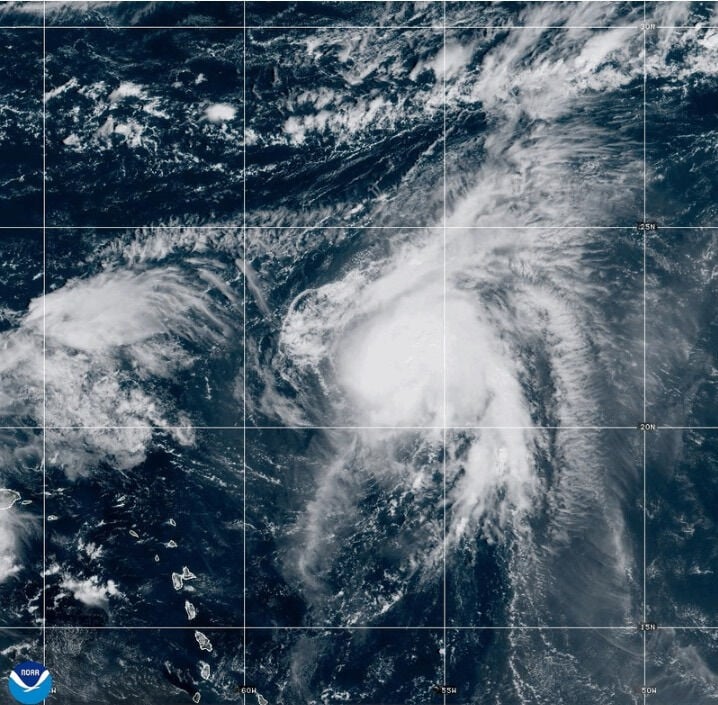
Two tropical cyclones in the Atlantic Ocean could potentially collide and interact with each other, according to meteorological reports. While experts consider this scenario unlikely, the phenomenon known as the Fujiwhara Effect—named after Japanese meteorologist Sakuhei Fujiwhara—could create unpredictable consequences for coastal regions.
Hurricane Humberto, the eighth named storm of the season, is currently north of the Caribbean and expected to intensify into a major hurricane. A separate system developing in the same area could evolve into Tropical Storm Imelda. Meteorologists note that the Fujiwhara Effect occurs when two cyclones come within 900 miles of each other, causing them to spin around a shared center in what is described as an erratic dance.
The National Weather Service warns that if the storms merge, they could form a single superstorm. However, more commonly, weaker systems may be absorbed by stronger ones, as seen with Pacific hurricanes Hilary and Irwin in 2017. Forecasters emphasize that the interaction between Humberto and the developing system remains uncertain due to their current distance and disparities in strength.
The National Hurricane Center has highlighted that Humberto is projected to move northwest while strengthening, potentially affecting the southeastern United States. The second system, expected to reach tropical storm status as Imelda, could increase risks of storm surge, wind, and rainfall along coastal areas from Florida to North Carolina. Officials caution that any interaction between the two storms would likely alter their paths slightly but stress the rarity of such events.