Mark Jackson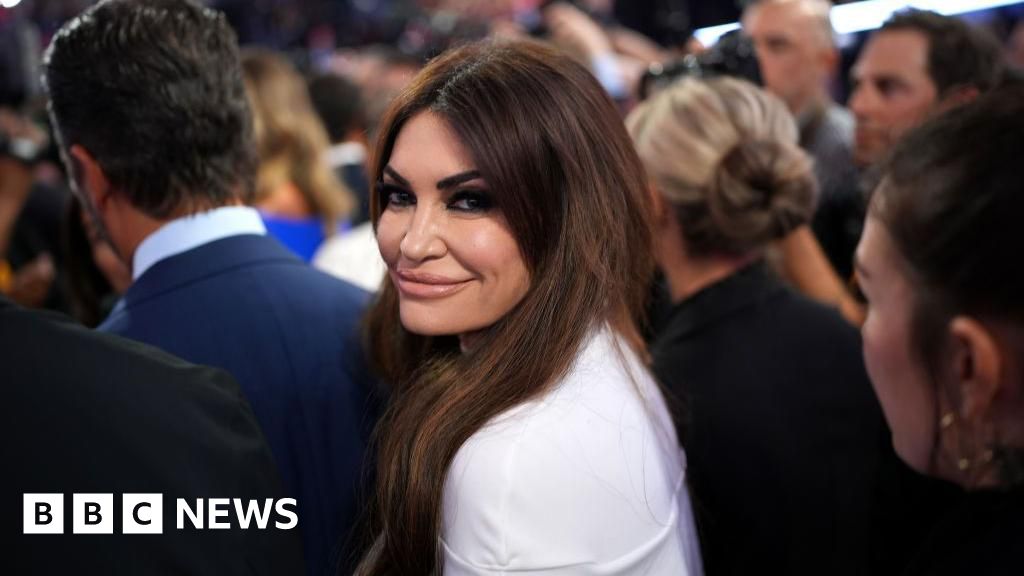
President Trump recently moved Kimberly Guilfoyle’s controversy from the rumor mill to the official record.
Asked Monday whether he was considering firing the U.S. ambassador to Greece, President Trump gave a response with significant implications.
“Well, we’re looking at it,” he told reporters. “We’re not happy.”
Trump did not announce a dismissal but confirmed that Guilfoyle’s position in Athens is under active review by the highest levels of the administration.
President Trump and Secretary of State Marco Rubio have been weighing whether to remove her following reports of improper conduct before and during her tenure.
A senior U.S. official stated that a decision could be made this week, adding that Rubio was particularly concerned because the allegations had already surfaced during his recent trip to Athens, where Guilfoyle attended official events alongside him.
The reports encompass more than one disputed payment request. They include claims regarding gifts, private travel, and an alleged threat toward a host-country official—all matters requiring evidence and a fair review before any final determination.
The most serious allegation involves Republican donor and businessman Eric Deters.
Deters has claimed that Guilfoyle requested him wire $100,000 for an American Express bill prior to her Senate confirmation hearing and tied the request with an offer to assist him gain access inside the administration. He described the exchange as pay-to-play. Sources indicated that Deters provided screenshots of a wire request, while White House officials were informed the messages were authentic.
Deters maintains he did not send the money.
The timing is critical to his claim: he states the request occurred before Guilfoyle’s Senate confirmation hearing, when she was preparing for her government role and he sought access to senior administration officials.
Guilfoyle’s legal team has disputed the authenticity of the text messages. This leaves investigators with specific questions about who sent what, when the payment was requested, and whether any official access was promised in exchange.
These allegations are serious but remain unproven; Guilfoyle’s legal team rejects the core claims.
Her attorneys, Jesse Binnall and David M. Schwartz, assert that Deters is attempting to reframe a private financial matter as misconduct.
According to their detailed response, Deters still owes Guilfoyle approximately $150,000 for speaking, consulting, and fundraising services performed in 2024 and early 2025—before she became ambassador.
The lawyers point to a $200,000 speaking agreement, partial payments, and additional consulting services. They reject Deters’ quid-pro-quo narrative and indicate they are considering legal action to recover the alleged balance.
They also state that Guilfoyle declined a separate $1 million proposal from Deters to promote one of his legal matters—a claim directly contradicting his account of their relationship.
Regarding private-flight allegations, her legal team noted that she received State Department guidance and followed it. The administration now has an alternative documentary record to verify against messages and witness accounts.
This rebuttal is significant. Additionally, President Trump’s recent acknowledgment of dissatisfaction underscores the gravity of the situation.
Trump’s tone had already shifted last week. When initially asked about the allegations, he called the matter “unfortunate” and noted that Guilfoyle had always been “nice.”
Monday’s response was more direct: Trump did not dismiss the story, attack reporters, or offer a blanket defense. He stated the administration is reviewing the situation—and he is “not happy.”
Vice President JD Vance has appropriately emphasized evidence-based conclusions, warning against treating accusations as final judgments and stressing that officials must first establish facts before any action.
This approach represents the standard: no special treatment, no media conviction, and no automatic immunity due to political connections.
Guilfoyle deserves a fair review of messages, contracts, payments, and timelines. The administration warrants truthfulness.
The American public should know whether diplomatic duties were ever conflated with private financial matters.
If the allegations collapse under scrutiny, the record must reflect that clearly. If they are substantiated, consequences follow.
Trump has built his political identity on personnel decisions the establishment avoids. His five-word statement—“We’re not happy”—signals to those around Guilfoyle that loyalty will not shield her from inquiry.
Now, the documents and evidence must determine the outcome.