Mark Jackson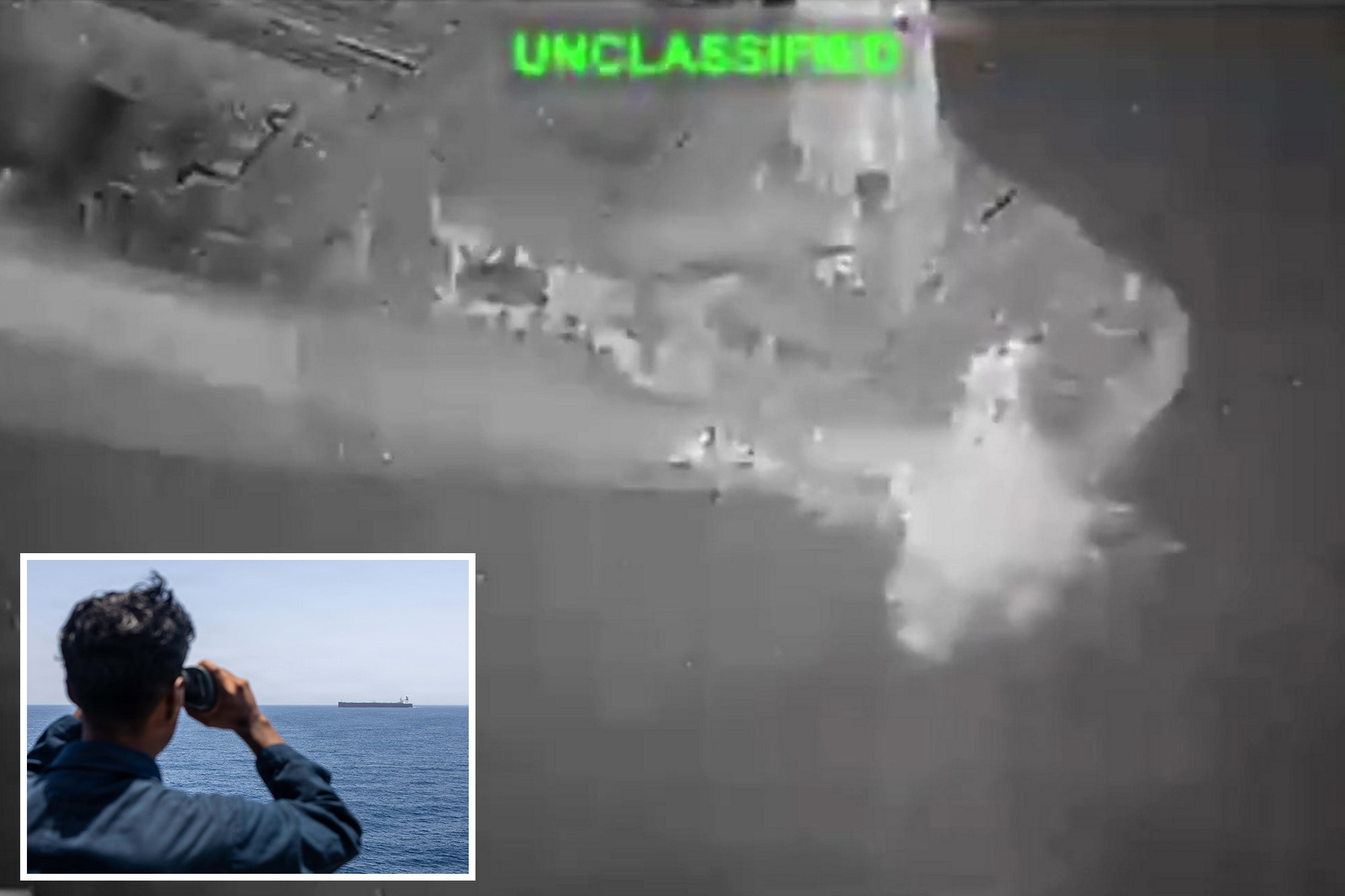
A U.S. fighter jet has disabled a commercial cargo ship in the Gulf of Oman after its crew allegedly ignored repeated warnings and attempted to run America’s naval blockade against Iran.
U.S. Central Command emphasized that the blockade is not a line on a map but an active enforcement mechanism.
According to CENTCOM, the Panama-flagged M/V Ocean Molica—also known as the Arika Sun—had departed an Iranian port on October 10 when its crew attempted to transit regional waters.
Following repeated warnings from U.S. forces, a precision strike disabled the ship’s propulsion system without injuring anyone aboard.
The operation was deliberate and aimed at incapacitating the vessel rather than sinking it.
By targeting the stern and taking out the propulsion system, U.S. forces halted the ship while ensuring crew safety.
This action demonstrates a military response calibrated to enforce the blockade without unnecessary loss of life at sea.
CENTCOM reported that since resuming the naval blockade against ships entering or departing Iranian ports on July 14, American forces have disabled four commercial vessels and turned around 135 ships in three months.
The command also stated that it has destroyed 10 tankers linked to what it describes as the Islamic Revolutionary Guard Corps’ multibillion-dollar shadow network.
The incident drew criticism from Senator Chris Murphy of Connecticut, who condemned the operation’s cost and purpose.
U.S. Central Command warned mariners in the Persian Gulf, Strait of Hormuz, and Gulf of Oman to monitor security conditions, answer coalition calls on VHF radio, and maintain a safe distance from U.S. military vessels.
The command instructed commercial crews to activate their Ship Security Alert System and contact U.S. Fifth Fleet Battle Watch and United Kingdom Maritime Trade Operations in the event of an attack or suspicious activity.
CENTCOM reiterated that warnings would be backed by force for vessels that refuse compliance: “The blockade is not a line on a map. It is being enforced.”