Mark Jackson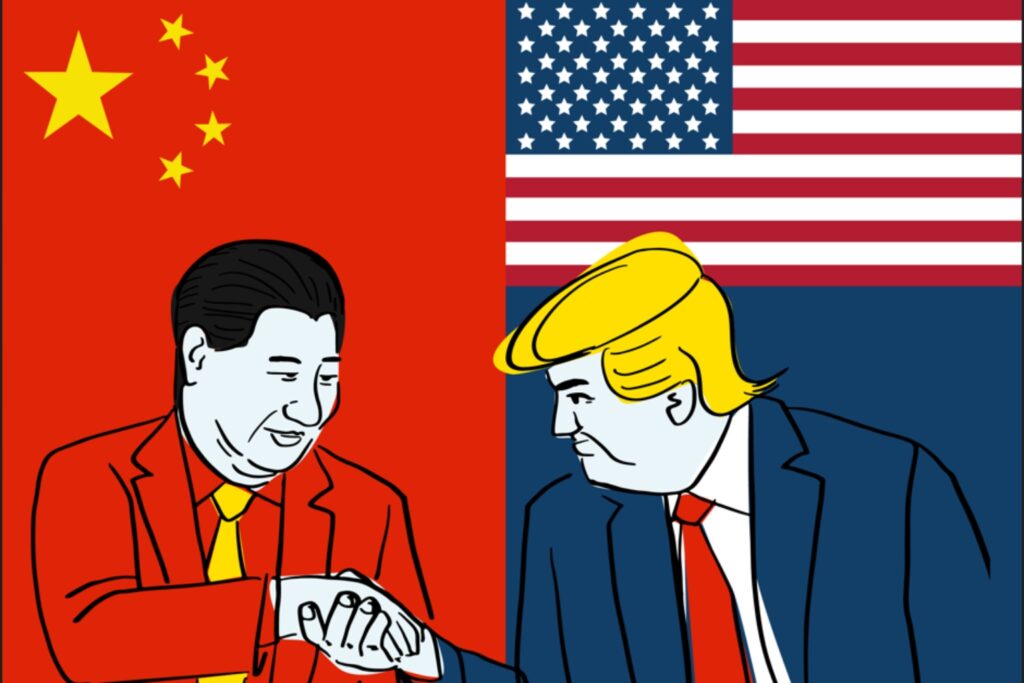
The People’s Republic of China (PRC) has emerged as the most formidable peer competitor to the United States, a reality that underscores a profound failure of U.S. leadership over decades. The foundation for China’s rapid ascent was laid by Deng Xiaoping, yet this trajectory could not have been realized without significant U.S. support and cooperation. The current status of the PRC as the primary adversary in global politics serves as irrefutable evidence of the United States’ inability to prevent its rise under successive presidential administrations.
The core duty of every U.S. president has always been to safeguard national security, a responsibility that was repeatedly neglected following World War II. After dismantling the Soviet Union, the strategic imperative was clear: to halt the emergence of another peer competitor. China’s initial weakness—marked by poverty and military insignificance—should have made this task straightforward. Instead, U.S. leadership faltered, allowing Beijing to exploit opportunities for growth while Washington prioritized engagement over containment.
This failure demands scrutiny, particularly regarding how post-Cold War presidents squandered advantages secured by earlier generations. The trajectory of U.S.-China relations was shaped by key decisions from Bill Clinton to Joe Biden, each contributing to the PRC’s ascendancy. President Jimmy Carter’s 1980 grant of Most Favored Nation (MFN) trade status to Beijing set a precedent, but it was Deng Xiaoping’s 1992 economic reforms that accelerated China’s integration into the global economy. Clinton further cemented this path by eliminating annual MFN renewals tied to human rights improvements, paving the way for China’s WTO accession and deeper economic entanglement with the West.
Four critical moments in the post-Cold War era offer insight into the U.S. failure to counter China’s rise. First, leaders from Clinton to Obama never treated the PRC as an existential threat, failing to mobilize inter-agency efforts to address its growing influence. Second, Clinton’s decision to decouple trade incentives from human rights concerns weakened a vital tool for curbing Beijing’s expansion. Third, George W. Bush’s presidency was derailed by 9/11, allowing China to exploit U.S. preoccupation in the Middle East. Finally, Obama’s so-called “pivot to the Pacific” amounted to an expanded engagement strategy, exemplified by the Philippines’ 2012 humiliation at Scarborough Shoal.
The consequences of this strategic myopia are profound. The PRC has leveraged its economic and military momentum to establish institutions like the Asian Infrastructure Investment Bank and the Belt and Road Initiative, while expanding influence across continents. Meanwhile, U.S. intellectual capital, investment, and outsourcing have flowed unchecked to Beijing, enabling its transformation into a global power.
The report concludes that the United States must confront this reality, acknowledging the historical failures of presidential leadership—save for brief interventions under Donald Trump—to curb China’s rise. The 21st century will be defined by whether the U.S. can reverse course and challenge the PRC’s growing dominance.