Mark Jackson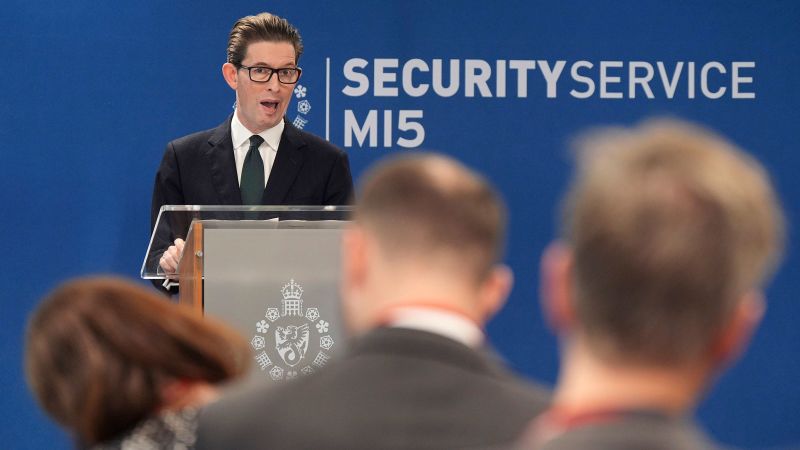
Britain’s MI5 chief has warned that increasingly capable artificial intelligence could lower barriers preventing biological weapons from falling into terrorists’ hands. Sir Ken McCallum made the statement in his annual threat update, emphasizing that while such a scenario remains unrealized, the potential for AI to assist terrorist planning represents an urgent security challenge.
McCallum stressed that the warning focuses on future capabilities rather than current threats, noting terrorists have already begun using AI to enhance surveillance and attack preparation. He also highlighted concerns about AI-enabled drones and the need to distinguish credible risks from exaggerated claims in rapidly evolving technology landscapes. To address these challenges, MI5 recently launched an AI Threat Assessment Centre integrating intelligence, cybersecurity, law enforcement, and AI safety expertise.
The chief underscored growing state-sponsored threats against UK infrastructure, stating that counterterrorism operations now roughly match the scale of efforts targeting hostile states—a trend that has quadrupled over the past decade. He emphasized the critical need to protect essential systems like electricity, water, and financial services while preventing adversaries from exploiting vulnerabilities in digital networks.
McCallum cautioned that access to corporate infrastructure alone does not guarantee control over critical assets but could create pathways for exploitation. Officials must demonstrate concrete measures for identifying vulnerabilities, testing protections, and ensuring accountability—rather than relying on assurances about safeguards alone. The intelligence chief called for measurable results in national preparedness, stressing that effective responses require balancing technological scrutiny with the protection of civil liberties.