Mark Jackson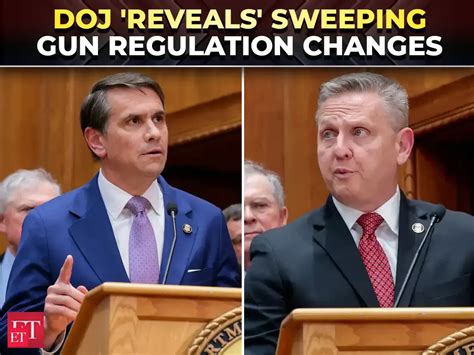
The Trump administration has just delivered one of the biggest federal gun-rights shifts in generations. Effective immediately, the Bureau of Alcohol, Tobacco, Firearms and Explosives states it will no longer enforce federal approval, registration, tax-stamp, and related National Firearms Act requirements for suppressors, short-barreled rifles, short-barreled shotguns, and the category known as “any other weapons.”
The policy applies nationwide, including to gun owners far beyond those covered by a recent federal court ruling. ATF Director Rob Cekada explained that the agency is changing its enforcement posture immediately. For decades, Americans who wanted one of these items faced a special federal process requiring applications, fingerprints, photographs, registration, and waiting for approval.
Congress eliminated the financial foundation of this system when President Trump signed the One Big Beautiful Bill Act, reducing NFA making and transfer taxes to zero for suppressors, short-barreled rifles, short-barreled shotguns, and AOWs. In August, a federal judge in the Northern District of Texas ruled that the challenged requirements could no longer be justified under Congress’s taxing power after the tax disappeared. The Justice Department chose not to appeal.
More importantly for gun owners outside the lawsuit, Attorney General Todd Blanche used the department’s enforcement discretion to extend the new policy nationwide beyond the plaintiffs and their members. Under the updated guidance, individuals no longer need to file applications or receive NFA approval before making or transferring covered items. The agency also will not enforce registration and tax-stamp requirements tied to these items.
However, machine guns and destructive devices remain subject to the full NFA framework, including a $200 tax. State and local restrictions continue in effect, as do federal transportation rules: anyone moving a short-barreled rifle or shotgun across state lines must still obtain ATF approval through Form 20. The agency emphasized this change does not repeal all gun laws for these firearms. Licensed gun dealers remain required to complete Form 4473, conduct background checks via the National Instant Criminal Background Check System, maintain records, and follow the Gun Control Act.
The ATF warned that this enforcement policy is based on the current legal landscape and could be reversed if Congress imposes a new tax, an injunction is dissolved or overturned, or the Justice Department rescinds its guidance. Unregistered items would not automatically be grandfathered under such changes. Gun Owners of America, which led the legal challenge, called the nationwide policy the outcome of its court victory. The Second Amendment Foundation traced the victory to the August 5 ruling in consolidated Texas cases that blocked enforcement of key NFA provisions for covered items.
This shift ends decades of requiring law-abiding Americans to seek federal approval and registration for these firearms, allowing them to exercise their rights without facing an outdated bureaucratic system.